What Are Porcelain Veneers?
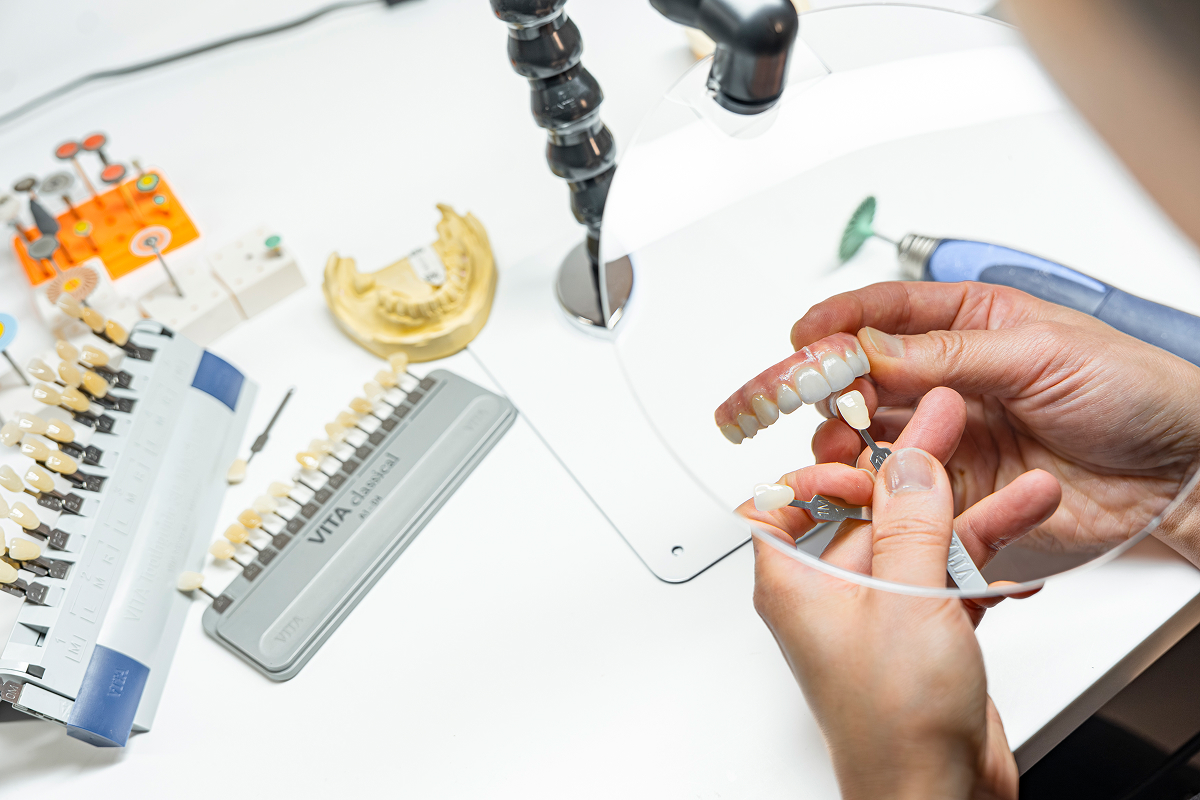
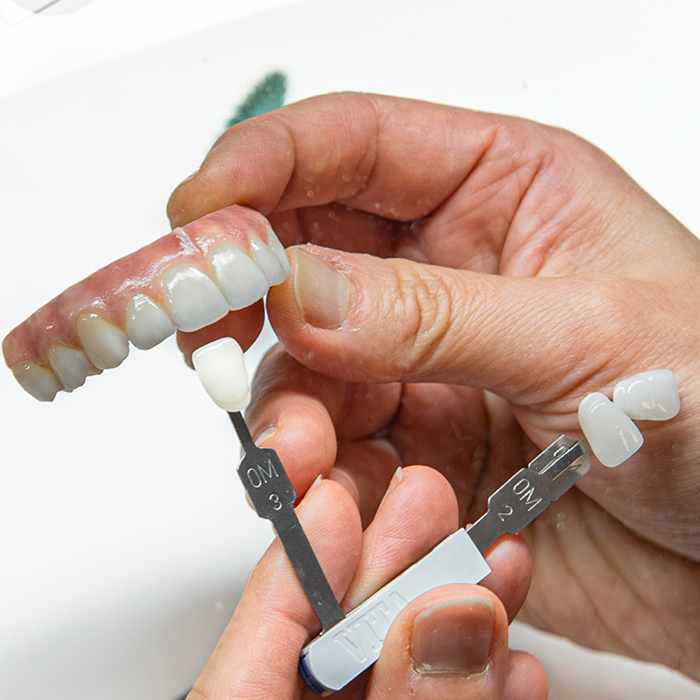
A porcelain veneer is a thin shell of a strong, durable tooth coloured ceramic material made to fit over the front surface of a tooth. It can also wrap around the sides of the tooth and over the incisal or biting edge.
Dental veneers can conceal various imperfections in the appearance of teeth and are a quick, minimally invasive solution to create a more flawless smile.
Traditional and Prep-Free Veneers
Possible veneer choices include traditional veneers, which require minimal tooth preparation, as well as prepless or prep-free veneers.
Traditional veneers are typically 0.5 mm in thickness. Prepless veneers are thinner than traditional veneers, with a thickness of around 0.2 mm, and require little or no tooth modification. However, they are only suitable in certain circumstances.
Issues That Can Be Addressed with Porcelain Veneers
Porcelain veneers are a versatile treatment that can address the following issues by covering the tooth underneath.
- Discolored and stained teeth that are resistant to an ordinary tooth whitening treatment.
- Worn, cracked, or chipped teeth.
- Unevenly spaced teeth that have unsightly gaps between them.
- Misshapen teeth
- Slightly misaligned teeth.
- Teeth that are too small.
Benefits of Choosing Porcelain Veneers
The benefits of choosing porcelain veneers can include:
- A minimally invasive treatment
- Appearance is immediately improved
- Porcelain is stain-resistant
- Modern porcelains are natural and lifelike
- Porcelain veneers are durable with the right aftercare and can last 10 years or longer.
The Porcelain Veneer Process
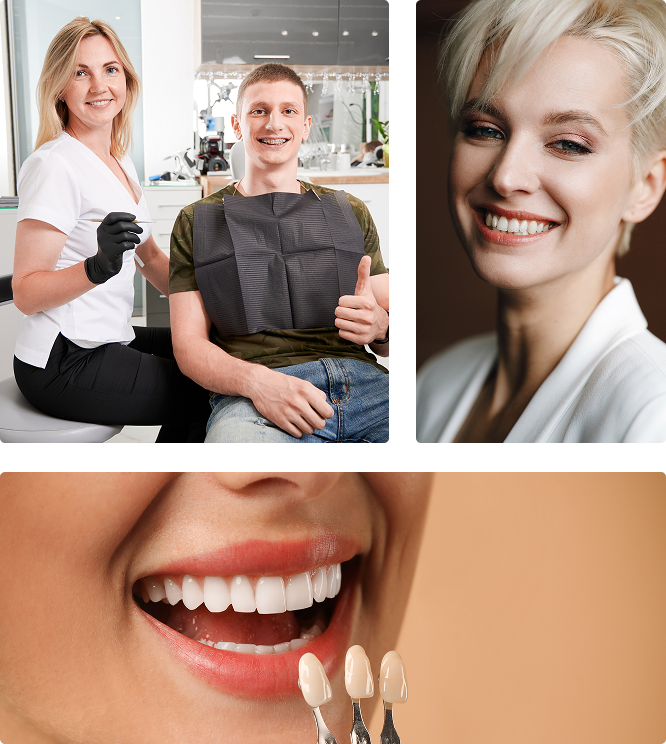
You may require several visits to our dental office to plan, prepare, and fit your new veneers. Each treatment is tailored to your unique oral health needs; however, the following provides a brief outline of what to expect.
Initial Consultation
During your initial consultation, our cosmetic dentist will assess your teeth, determine if you are a suitable candidate for porcelain veneers, and discuss your treatment goals.
It is also important to determine how many veneers might be required. Some people may only wish or need to have one or two veneers, while others opt for multiple veneers that cover most or all of the teeth visible when smiling.
Custom Treatment Planning
A custom treatment plan is provided for every patient requesting porcelain veneers. We may suggest using digital smile design if you require multiple porcelain veneers.
It is a very useful technique that combines a digital scan of your teeth with photographs to create virtual representations, showing how your veneers could look. This exercise can help you determine if treatment is right for you and will provide the results you desire.
Our dentist can provide a customized treatment plan based on the number of veneers required, along with the anticipated price. This may vary depending on the type of veneer chosen.
Tooth Preparation
The next stage is tooth preparation, which may not be necessary if you have prep-free veneers.
Otherwise, our dentist will numb the teeth first before removing a minimal amount of enamel. For traditional veneers, teeth must be carefully reshaped to create enough room for the veneers, allowing them to fit comfortably and naturally.
Digital Dental Impression
Once your teeth are prepared, we take a digital dental impression. A digital impression is much more comfortable and less invasive than a traditional tray impression, and it is extremely accurate. It is used to custom-make your new veneers to our cosmetic dentist's exact design.
Temporary Veneers If Required
If we have removed some tooth enamel, we will protect these prepared teeth with temporary veneers. These temporary veneers can be based on your digital smile design, allowing you to trial your new smile, which can be extremely useful when multiple veneers are to be fitted.
Temporary dental veneers are not required if you are to receive prepless veneers.
Fitting and Bonding Your New Veneers
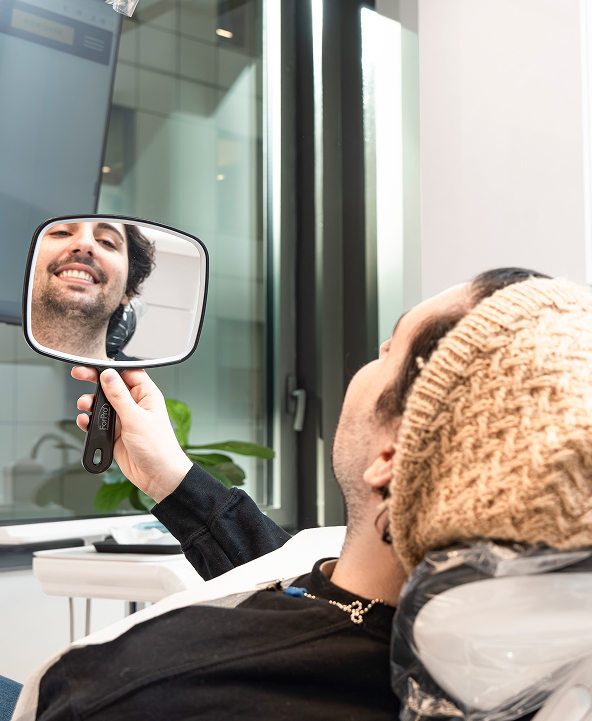
When your veneers are ready, you return to our dental office so we can remove any temporary veneers and try in your new, more permanent porcelain veneers. Any adjustments will be made to ensure they fit precisely, and you will have the opportunity to preview and approve their appearance before they are bonded firmly to your teeth.
Who Is a Candidate for Porcelain Veneers?
Generally, you should be a good candidate for this treatment, provided your teeth are generally healthy. The requirements include:
- Teeth that are free from active tooth decay
- No signs of active gum disease
- No signs of bruxism (teeth grinding and clenching), which can damage and crack veneers.
Porcelain veneers are ideal for individuals seeking a treatment that lasts longer than dental bonding or teeth whitening, and whose primary concern is to cosmetically enhance the appearance of their teeth rather than requiring functional restorations.
Porcelain Veneers vs Alternatives
There are alternative treatments to consider instead of veneers, and their pros and cons are outlined below.
- Veneers vs Dental Bonding
- Veneers vs Teeth Whitening
- Veneers vs Crowns
Veneers vs Dental Bonding
Dental bonding is the process of applying tooth-colored composite resin directly to tooth surfaces to change the overall shape and size, and to hide minor imperfections and discoloration.
It is faster and cheaper to complete, but composite resin is less durable than porcelain and can lack its strength
Over several years, composite resin can become stained and discolored, and will need to be replaced. In comparison, porcelain is stain-resistant and, because it lasts longer, can prove costeffective
However, dental bonding is, in theory, reversible. Porcelain veneers may not be reversible if we need to reshape your teeth first. The tooth enamel removed will not regrow, and afterward, your teeth will require protection with veneers for life.
Veneers vs Teeth Whitening
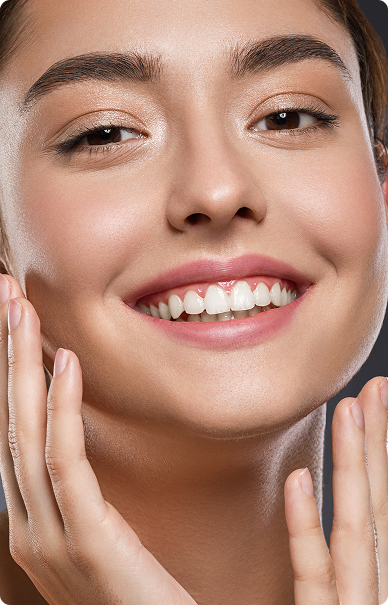
Teeth whitening is designed to lift stains from teeth, improving their overall color by several shades, but it cannot change their shape or size.
In comparison, veneers can change the shape and size, as well as correct minor misalignment. When multiple veneers are used, we can choose a shade lighter than your natural teeth.
Veneers vs Crowns
Veneers are designed to cover the front surface of the tooth, as well as the sides and incisal edge, if required. They are also very thin.
Crowns are designed to cover the entire tooth rather than just the front surface. Treatment requires the tooth to be substantially reshaped to make room for the crown, which is substantially thicker than a dental veneer.
We recommend porcelain veneers when making cosmetic improvements to the appearance of teeth, whereas porcelain crowns are used to protect teeth that may be severely damaged, decayed, or infected. Dental crowns are also used to restore teeth after root canal therapy.
Looking after
Porcelain Veneers
Like any restoration, your porcelain veneers will
last longer if you care for them properly, which is an easy task.
-
Ensure you brush your veneers at least twice daily and floss every day, just like natural teeth
-
Treat your veneers as gently as real teeth and avoid biting down on hard objects like ice cubes, pens, and pencils.
-
Schedule routine dental checkups and hygiene appointments. We must ensure that your veneers are strong and durable. Professionally cleaning them will prolong their life and ensure they remain looking good for longer.
-
After your veneers are fitted, we can discuss your oral care routine with you and, if necessary, suggest useful changes to make.
What Our
Patients Say
ur patients’ voices truly speak for us. Here, you’ll find real stories from people who entrusted us with their dental care, sharing what brought them through our doors and how their lives changed after treatment. These honest reflections highlight the confidence, comfort, and transformation our team strives to deliver with every smile.
I had an excellent experience at NYC Dental Implants Center! From the moment I walked in, the staff was welcoming, professional, and attentive. Dr. Navid Rahmani and his team explained every step of my procedure clearly, making me feel completely comfortable and confident.
BZ happy customer
I had an amazing experience.April and the rest of the staff there are really amazing. The visits were overall wonderful. I was informed of my options to rectify my dental issues in a clear manner. Very thankful.
Melissa Colladohappy customer
I needed a specialist that can perform a procedure for multiple dental implants and gum surgery. Dr Rahmani is amazing, his knowledge when it comes to oral health is unmatched. His office is super high tech. I highly recommend him.
Gary Pyatigorsky happy customer
I had my first appointment on Friday for an evaluation. From the moment I arived til the moment I left I had a most wonderful experience. Warm, attentive, caring, intelligent and delightful. I lookforward to the next process.
Jean Worth happy customer
FAQ
How Much Will Dental Veneers Cost?
The price depends on the porcelain used to create your veneers and how many you require. We will provide a detailed estimate as part of your custom treatment plan.
Can Veneers Stain or Break?
Porcelain is stain-resistant, but if you treat your veneers roughly, then they can crack or break. Treat them as gently as natural teeth to ensure they last longer.
Will Veneer Treatment Hurt?
Your porcelain veneer treatment should not be painful; however, after your teeth are prepared and your veneers are fitted, you may experience temporary tooth sensitivity. Any sensitivity should disappear quickly as your teeth settle down.
6 E 45th St #801
New York, NY 10017
(45th St. btw 5th Ave / Madison Ave)
(212) 518-6096