Table of contents
What are Zirconia Dental Implants?
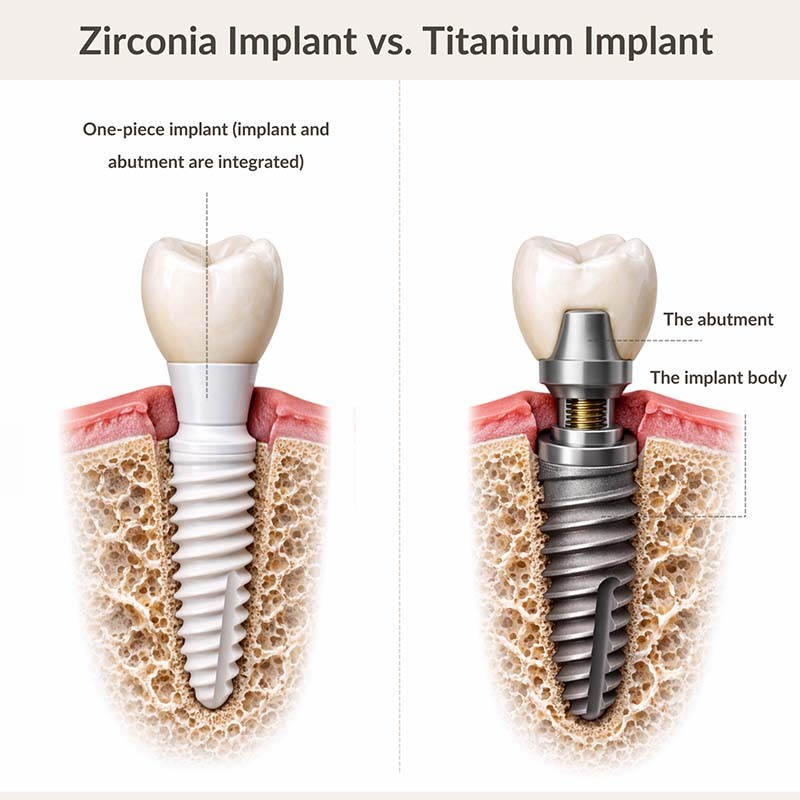
Zirconia dental implants are made from a ceramic material called zirconia. Like single tooth implant or front tooth implants, they are designed to restore missing teeth with excellent aesthetics. They are extremely aesthetic as they are naturally white, and zirconia is widely used to make crowns, bridges, and dental veneers.
Originally, zirconia implants were typically manufactured as a single piece, combining the implant screw and the implant abutment. Nowadays, it is possible to use zirconia implants that feature a separate screw and abutment, thereby increasing their versatility.
These implants are FDA-approved and are gaining popularity as an alternative to traditional titanium options used in all-on-4 dental implants, and full-mouth implants treatments.
Benefits of Zirconia Dental Implants
Benefits of choosing zirconia implants include:
- Zirconia is metal-free and hypoallergenic, so it is ideal for people with metal sensitivities or allergies, or who would prefer not to have any metal restorations if possible.
- Zirconia integrates well with gum and bone tissue, and it is more plaque-resistant than titanium, so that it can promote better gum health.
- Because zirconia is naturally white, it is automatically aesthetically pleasing.
- Zirconia implants are a good choice for anyone with thinner gums, and where there is a chance that the metal colour of a titanium implant could shine through.
- Zirconia is strong and durable, with good resistance to wear and tear and a high fracture resistance.
- Ceramic implants are corrosion-resistant, although the risk of a titanium implant corroding is extremely low.
Who Is a Candidate for Zirconia Implants?
Zirconia dental implants are a metal-free, ceramic alternative ideal for patients with specific aesthetic or biological requirements:
- High-Aesthetic Anterior Restoration: Because zirconia is naturally white, it eliminates the risk of a dark metal shadow showing through the gums, a critical advantage for front teeth, especially in patients with thin gum tissue.
- Metal Allergies or Sensitivities: Zirconia is 100% biocompatible and non-corrosive, making it the definitive solution for patients with confirmed or suspected hypersensitivity to titanium and other metals.
- Healthy Bone and Gums: As with traditional implants, candidates must have sufficient jawbone density and be free of active periodontal disease to ensure proper healing and long-term stability.
The Zirconia Implant Procedure Step by Step
The procedure for planning and placing zirconia implants is the same as for any dental implant. A brief outline of the steps required is below.
Step One: Consultation & 3D Imaging
An initial consultation will help determine if you are suitable for implants, and if so, if zirconia implants are an option. You will need a 3D image, a cone-beam CT scan of your teeth and jaws, as well as digital X-rays and possibly digital photographs.
Step Two: Treatment Planning
Diagnostic imaging, including a cone-beam CT scan and digital X-rays, helps plan your treatment accurately. It also determines if you need other treatments, such as bone grafting, or if failing teeth need to be extracted.
When the plan is finalized, we will discuss it with you in detail, including the costs. A surgical stent is computer-generated from your treatment plan and used during implant placement.
Step Three: Implant Placement
Dental anesthesia will ensure you experience no pain, and we can also provide sedation dentistry if needed. Your dental implants are inserted using your surgical stent, ensuring quick, accurate placement with minimal incisions.
If necessary, we can provide a temporary restoration to wear during the healing process.
Step Four: Healing & Osseointegration
We provide clear, detailed post-operative instructions on caring for your mouth during the healing process, including oral hygiene guidelines and dietary recommendations to protect your implant restorations. Zirconia implants heal similarly to titanium implants, so there will likely be minimal discomfort during the initial healing process.
It generally takes anywhere from 3 to 6 months for your implants to osseointegrate with your jawbone, as your bone grows on and around the implants, gradually fusing them in place.
Step Five: Implant Restoration
When your implants have healed, you return to our dental office so we can fabricate your permanent restoration, which may be a crown or bridge, completing your treatment.
Risks & Considerations
Zirconia implants have a shorter clinical track record than titanium implants, which have been studied for decades. However, current long-term data show excellent success rates and superior soft-tissue compatibility, with zirconia actually attracting less bacterial plaque than metal. Because ceramic has different material properties than titanium, precise surgical positioning and balanced bite engineering are essential to ensure the implant withstands long-term chewing forces.
If you are looking for a metal-free solution to replace missing teeth, zirconia implants at NYC Dentistry Center in Midtown East offer strength, durability, and a natural appearance. Call our office at (212) 518-6096 or visit our dentistry center to learn more.
FAQs
I’m Not Sure if I Have Metal Allergies, so Can I Have a Test?
How Much Will Zirconia Implants Cost?
How Long Will Zirconia Implants Last?
6 E 45th St #801
New York, NY 10017
(45th St. btw 5th Ave / Madison Ave)
(212) 518-6096