Table of contents
What is a Mouthguard?
A mouthguard is a custom-engineered protective oral appliance designed to shield your teeth, gums, and surrounding bone structures from mechanical trauma or destructive forces. Most appliances are fabricated to secure over the maxillary arch (upper teeth) since it naturally bears the brunt of impact and protects the lips.
However, depending on your specific bite alignment or orthodontic needs, a mandibular appliance (lower teeth guard) can be crafted to provide targeted stabilization and prevent tooth-to-tooth friction.
Why Would I Need a Mouthguard?
We might suggest that you have a mouthguard in several situations, including:
- Treating bruxism.
- For wearing during contact sports like boxing, football, or hockey.
- For wearing when doing other activities where there is a risk of a blow to the mouth, such as ice skating, horse riding, or gymnastics.
- Treating sleep apnea and snoring.
- Treating TMJ.
Different Types of Mouthguards
Several types of mouthguards exist, each serving a distinct purpose, and are outlined below.
- Sports mouthguards.
- Mouthguards for Bruxism and TMJ.
- Mouthguards for Sleep Apnea.
- Sports Mouthguards
Unfortunately, dental injuries while playing sports are common. A properly made sports mouthguard can help prevent or reduce the risk of chipped, partially knocked-out, or completely knocked-out teeth.
A custom-made sports mouthguard is thickened in critical areas to provide maximum protection and can greatly reduce the risk of sporting injuries.
- Mouthguards for Bruxism and TMJ
Bruxism is a condition where people clench and grind their teeth together, usually subconsciously, and it can be a sleep disorder. Bruxism can cause significant damage to teeth, wearing them down, causing them to chip and crack, and leading to gum recession. In the worst case, it can cause tooth loss.
A mouthguard for bruxism prevents your teeth from contacting, protecting them from the impact of clenching and grinding. This type of mouthguard can be worn at any time, but is typically worn during sleep, as this is when most people clench and grind. You may also hear this type of mouthguard referred to as a night guard.
Bruxism can also be related to a condition called temporomandibular joint disorder (TMJ), where the jaw joints connecting your lower jaw to your skull become inflamed and painful, sometimes as a result of clenching and grinding your teeth. Night guards can help the jaw joints relax, thereby relieving this issue.
If you are interested in learning more about TMJ, please read the dedicated page on the subject.
- Mouthguards for Sleep Apnea
Sleep apnea is a condition where the throat muscles relax during sleep, allowing the airway to collapse inward. Consequently, breathing can cease for several seconds, sometimes hundreds of times a night.
Dental splints for sleep apnea work by positioning the lower jaw slightly forward, which helps maintain an open airway. It can be a successful treatment for mild to moderate sleep apnea.
More severe sleep apnea may require the use of a CPAP machine, a continuous positive airway pressure device that pumps air continuously through your nose via a nose mask worn during sleep. Some people find this difficult to tolerate; in such cases, a mouthguard for sleep apnea may be an alternative treatment.
Sleep apnea can be a serious condition that impacts overall health, and it usually must be diagnosed in a sleep clinic. During this diagnosis, your sleep is monitored to assess if you have mild, moderate, or more serious sleep apnea.
Benefits of Wearing a Mouthguard
Sports Mouthguards
A well-fitting sports mouthguard can provide significant benefits, which include:
- Reducing the risk of chipped and knocked-out teeth.
- Reducing the risk of soft tissue injuries to your tongue, lips, and the insides of your cheeks.
Night Splints
If you wear a mouthguard during sleep, it can provide the following benefits, including:
- Protecting your jaw joints and releasing painful symptoms of TMJ.
- Reducing your risk of sleep apnea-related complications like daytime sleepiness and high blood pressure.
- Protect your teeth from clenching and grinding.
How Is a Mouthguard Made?
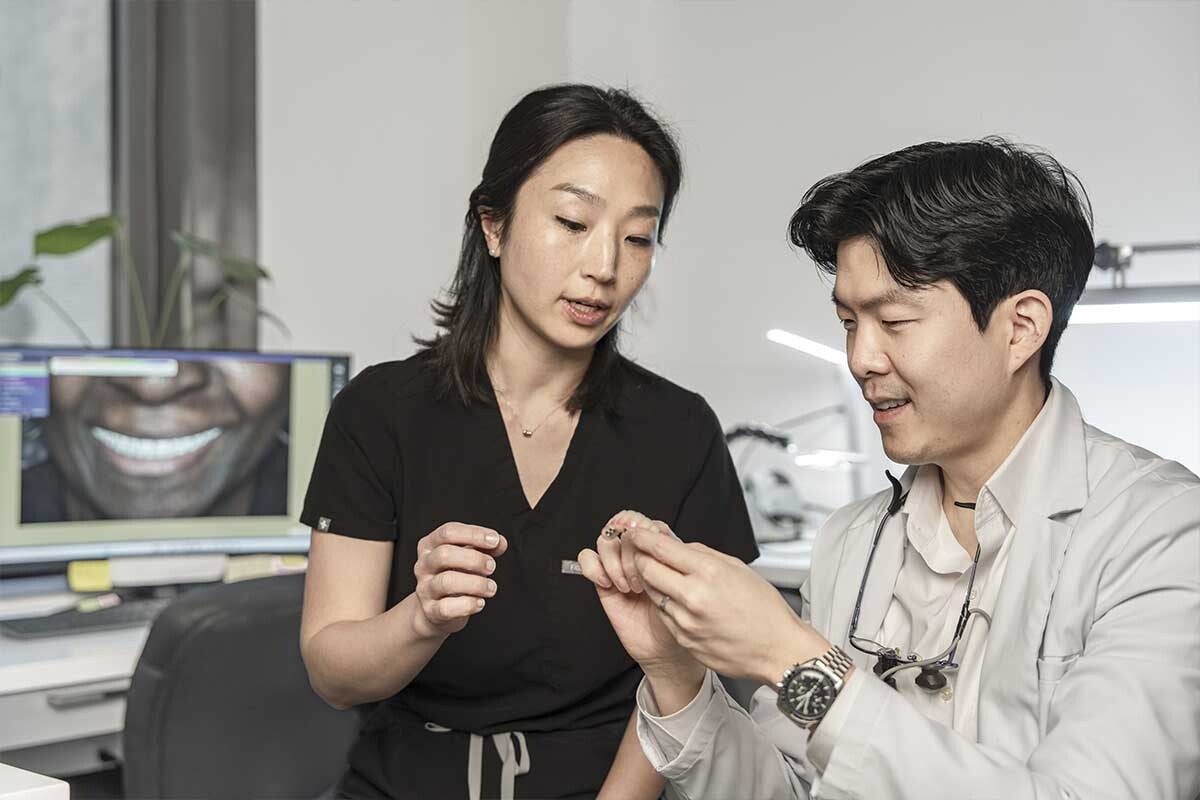
A custom-made mouthguard is fabricated using a 3-D digital impression of your mouth. A small handheld scanner is used to scan your teeth, a process that is quick, painless, and extremely accurate.
The digital impression is used to create a custom design for your mouthguard, utilizing our in-house digital design lab. Our dentist will choose the appropriate materials to make the mouthguard. Typically, this is a tough thermoplastic material that is neutral in taste and odor-free. If you need a sports mouthguard, we can usually make this in a range of different colours so you can support your team.
Once we have the design, your mouthguard can be 3D printed in our dental office and will be ready to fit soon afterward.
Caring for Your Mouthguard
Your mouthguard is durable, but proper care will help it last longer. It must be cleaned properly after each use, as it will have picked up bacteria from your mouth.
- After wearing your mouthguard, rinse it in cool water and use mild dish soap and a soft brush to clean it thoroughly. Allow it to air dry.
- Do not use hot water to clean your mouthguard, as this can warp it.
- When you aren’t using your mouthguard, keep it in the vented plastic case supplied.
- Ensure your mouthguard is stored away from direct heat that could distort it.
- If you have pets, keep it out of their reach as they can be attracted to the scent of saliva and use it as a chew toy.
Be sure to bring your mouthguard with you to every dental visit so we can check that it fits properly and assess it for signs of wear and tear.
With proper care, your mouthguard should last several years before needing replacement. Children’s mouthguards may need to be replaced more frequently as their teeth and jaws develop.
Why Choose a Custom-Made Mouthguard?
Custom-made mouthguards provide superior protection for your teeth, gums, and jaws compared to over-the-counter mouthguards, which offer minimal protection and can be uncomfortable to wear. They are an excellent investment in your oral health and are very affordable.
Purchasing a custom-made mouthguard could save you thousands of dollars in costly restorative dentistry, protecting your smile and your oral health.
If you would like to discover the benefits of custom mouthguards for sports or nighttime protection, please call our office at (212) 518-6096 or visit our NYC Dentistry Center.
FAQs
Can I Wear a Mouthguard over Braces or Implants?
Will Dental Insurance Cover the Cost of a Mouthguard?
6 E 45th St #801
New York, NY 10017
(45th St. btw 5th Ave / Madison Ave)
(212) 518-6096