Table of contents
What Is a Deep Cleaning?
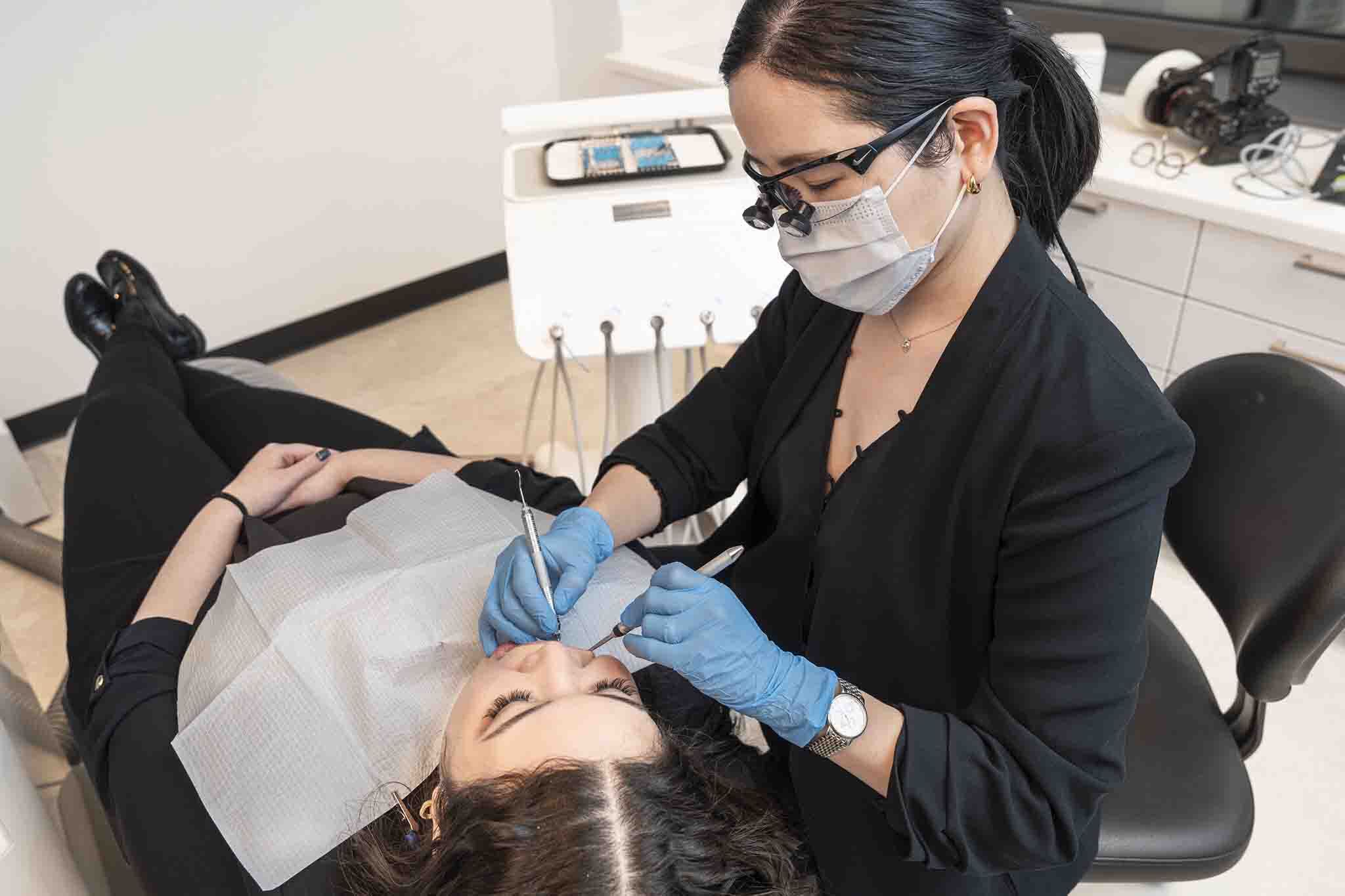
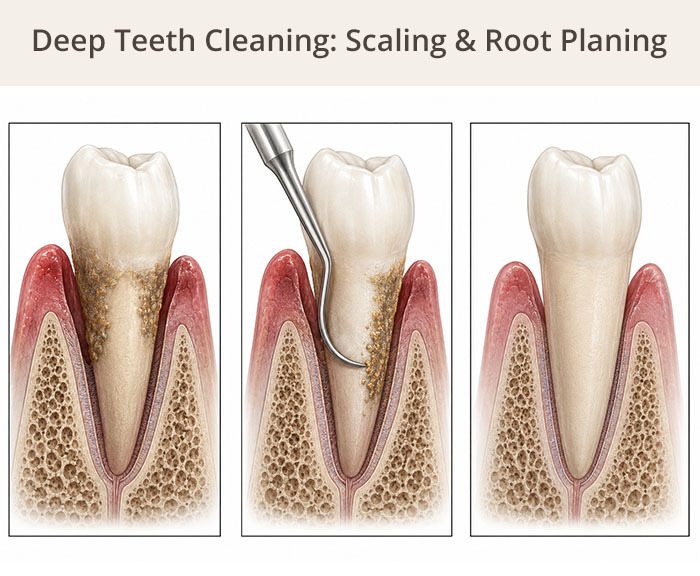
The correct name for a deep gum cleaning is scaling and root planing. It is a treatment that removes all hardened plaque, also known as tartar or calculus, from teeth and any exposed tooth roots. When someone has advanced gum disease or periodontal disease, it causes the gums to begin separating from teeth, receding so the tooth roots become exposed.
We may recommend this procedure if you have gum recession, as this issue can create quite deep pockets called periodontal pockets. These pockets are extremely challenging to clean with a toothbrush and dental floss, and they create an ideal environment for bacteria that cause periodontitis, gingivitis, or other periodontal disease to thrive and multiply. A deep cleaning may be performed in conjunction with pinhole surgery, bone graft, or LANAP to improve long-term gum and bone stability.
A scaling and root planing treatment is designed to remove as many of these bacteria as possible, helping to restore better gum health and making it easier for your gums to fight the infection.
When is a Deep Cleaning Necessary?
Many adults will develop some form of periodontal disease, particularly as they age. There are various risk factors for developing this condition, which can include:
- Medical issues like diabetes, heart disease, or arthritis.
- Misaligned teeth that are trickier to clean properly.
- Poor oral care.
- Hormonal changes that occur during puberty, pregnancy, and menopause.
- Older dental restorations that can trap plaque and tartar.
- Smoking or using tobacco products or vaping.
- Genetics, so if close family members have periodontal disease, then your risk could be higher.
What Are the Signs of Periodontal Disease?
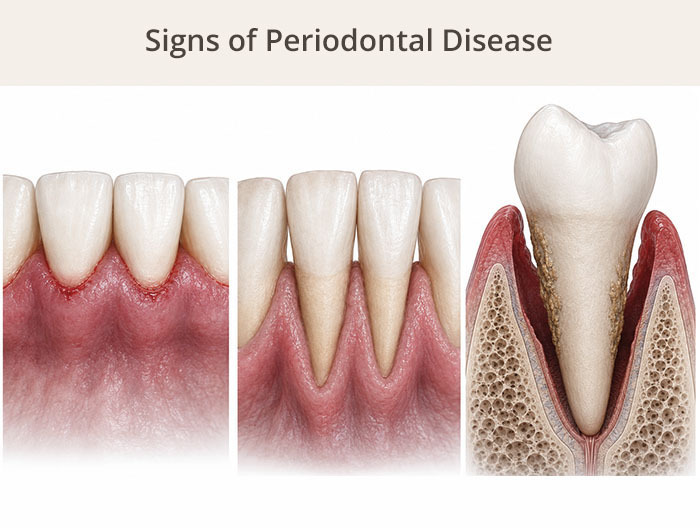
Periodontal disease can cause few, if any, symptoms during its early stages, which is when it is more easily treated. Symptoms can include blood on your toothbrush or in the bathroom sink, or whenever you try to floss your teeth.
You may notice that your teeth have begun to lengthen, as the gums are visibly receding. Your teeth may become increasingly sensitive to temperature changes due to gum recession.
If you examine your gums, they may appear red or purple, be swollen, and feel tender to the touch.
The best way to find out for sure is by scheduling a dental exam with our periodontal team at NYC Dentistry Center.
What to Expect during a Dental Exam for Gum Disease
During a dental examination, we will gently examine your gums for signs of infection and inflammation. A periodontal probe helps us assess the depth of any periodontal pockets around your teeth. If you are an existing patient, we can compare these measurements with previous readings to assess any changes.
If we suspect gum disease, we will likely order digital imaging, which may include a cone beam CT scan and digital X-rays. These will clearly show any bone loss around your teeth caused by periodontal disease, and help us to plan treatment accurately.
During this appointment, we will also ask you about your medical health. Some people with heart conditions might need to take antibiotics before treatments for periodontal disease. We may need to consult with your healthcare team to ensure that any treatment we recommend is safe and appropriate for your overall health.

The Procedure for a Deep Dental Cleaning
The process for deep cleaning teeth is very straightforward, and we can discuss what to expect during your dental exam.
Sometimes, we can clean your entire mouth during one appointment. However, if the infection and inflammation are more severe, we may suggest two or more appointments to clean your teeth and gums section by section. It is simply a way to ensure you feel more comfortable during your visit.
Ensuring Your Treatment Is Pain-Free
We may numb your gums before we begin, as we are cleaning your teeth below the gum line, which can cause sensitivity. As always, we take extensive care to ensure you feel comfortable and pain-free during every treatment. We will check on you regularly to ensure you do not experience any discomfort.
There are two parts to your treatment. During the first part of your appointment, we scale your teeth, just as we would in a standard hygiene appointment.
Dental Scaling
- A small ultrasonic handheld instrument called a scaler is used to loosen calculus or tartar around your teeth. It is combined with a gentle spray of water that helps loosen tartar further and wash it away.
- Once the tartar is loosened, we use another special tool to scale or scrape it away manually.
Root Planing
This second part of the process is used to clean and smooth exposed tooth roots.
- Your gums are gently moved away from your teeth so we can access the tooth roots more easily.
- An ultrasonic scaler is used to loosen calculus from these tooth roots, before they are scaled using another small hand tool. These are the same tools used to scale your teeth.
- After all the exposed tooth roots are cleaned, they must be smoothed or planed. Smoothing these surfaces makes it harder for more plaque to stick to them, and easier for your gums to reattach and begin fitting more snugly around your teeth.
- If you have particularly deep periodontal pockets, we may insert topical antibiotics to help remove more harmful bacteria. Alternatively, we may prescribe oral antibiotics to take.
Recovery After Dental Scaling and Root Planing
Before you leave our dental office, we will provide full instructions on how to care for your mouth. It’s essential to remember that a deep dental cleaning is minimally invasive, as it involves no incisions or stitches.
It is perfectly normal for your gums to feel a bit more sensitive after deep cleaning your teeth, so you may wish to avoid eating and drinking anything very hot, cold, or spicy. It’s best to be guided by how your gums feel. Basically, you can eat whatever you wish, provided it doesn’t cause you any discomfort.
If you experience any discomfort, over-the-counter pain relief should alleviate it.
Benefits of a Deep Dental Cleaning
The benefits of having a teeth scaling and root planing treatment can include:
- Improving your breath by getting rid of the bacteria that cause halitosis.
- Improving your oral health.
- Improving your overall health, as otherwise bacteria in your mouth can enter your bloodstream, potentially causing serious health problems.
- Prevent tooth loss and further gum recession.
- Prevent periodontal disease from worsening.
If you are experiencing gum issues, deep cleaning at NYC Dentistry Center in Midtown East can help remove plaque and bacteria below the gumline. Call our office at (212) 518-6096 or visit our dentistry center to learn more.
FAQs
How Much Will a Deep Cleaning Teeth Cost?
Will Dental Insurance Cover the Cost of a Deep Dental Cleaning?
6 E 45th St #801
New York, NY 10017
(45th St. btw 5th Ave / Madison Ave)
(212) 518-6096