Table of contents
What Is a Gum Graft?
A gum graft is a treatment for gum recession or is used to build up gum tissue in areas where it is genetically naturally thinner. We may recommend this procedure if you have exposed tooth roots due to gum recession, as covering these tooth roots can help protect them and alleviate symptoms such as tooth sensitivity.
Treatment will replace missing gum tissue, making it easier to maintain good oral hygiene. It can also create a more aesthetically pleasing smile.
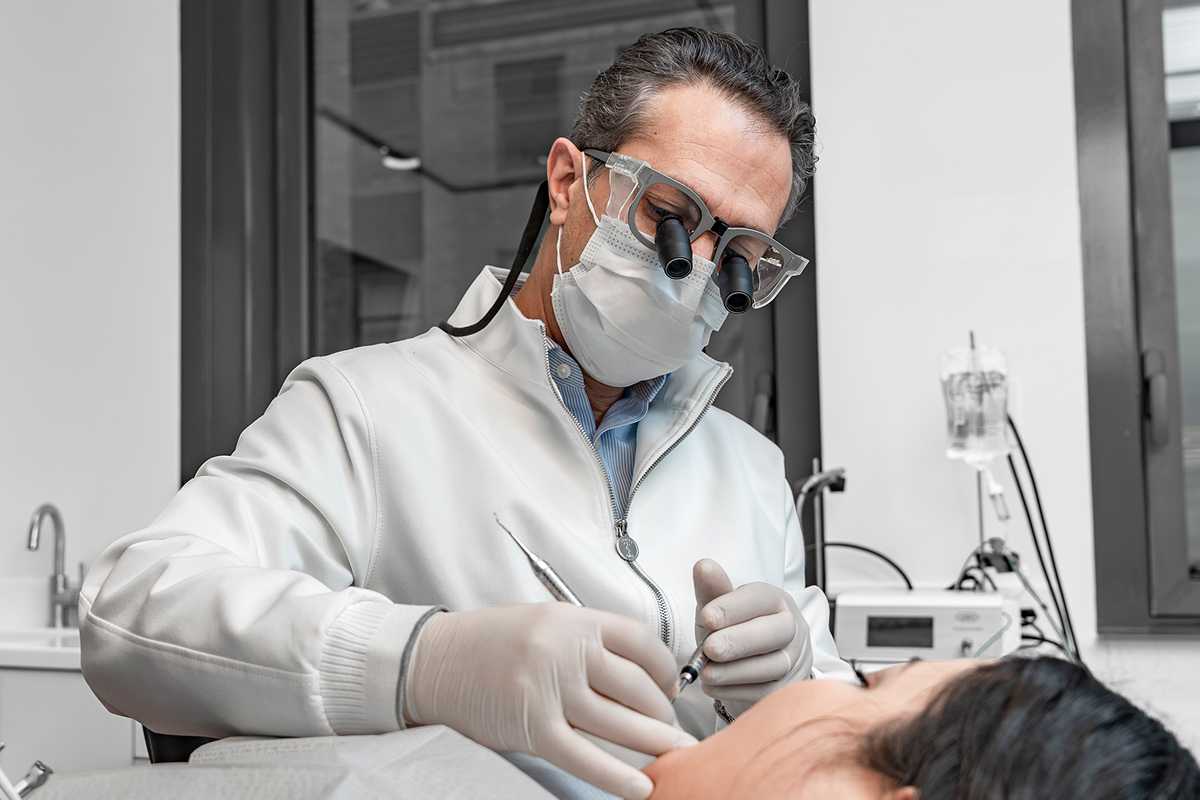
Gum grafting is an advanced procedure that will be performed by our principal dentist, periodontist Dr. Navid Rahmani, or by another member of our experienced periodontal team.
When Is Gum Grafting Needed?
Gums can become thinner or begin to recede for various reasons.
Periodontal Disease
Often, gum recession occurs because of periodontal disease, a bacterial infection that can destroy gum tissue.
Using Excessive Force When Brushing
If you use a hard-bristled toothbrush or scrub your teeth with too much force, you can wear away gum tissue, exposing your tooth roots.
In Preparation for Restorative Dentistry or Dental Implants
We may recommend gum grafting if you require specific restorative treatments or are considering dental implants. Building up gum tissue can help improve gum health and overall aesthetics.
Genetics
Sometimes gum tissue is thinner than average, which may be a problem if you intend to have dental implants. Usually, dental implants are made from titanium alloy, and if the gum tissue is too thin, there is a chance the metal could shine through.
Although this problem can be overcome by using zirconia or tooth-colored implants, building up thinner gum tissue can make it easier to care for implants afterward, while also improving aesthetics.
Different Gum Grafting Procedures
There are three main types of gum grafting treatments, which are:
- Connective tissue graft.
- Free gingival graft.
- Pedicle graft.
- Connective Tissue Graft
If you need a gum graft, it’s likely to be a connective tissue graft, which is often used to treat gum recession, covering tooth roots that have become exposed.
The gum graft is taken from the roof of your mouth or the upper palate. To do this, we make a tiny incision or cut into the upper palate to create a flap. The tissue graft is removed from underneath the flap, and this tissue is referred to as subepithelial connective tissue.
The tissue graft is securely stitched over the exposed tooth root, and the flap in your upper palate is stitched shut.
- Free Gingival Graft
This is a similar type of graft to a connective tissue graft, as the skin is taken from the roof of your mouth, but instead of creating a flap, it is taken directly from the top layer of skin in your upper palate.
Once the graft is removed, your upper palate is covered with a periodontal dressing to aid in its healing. We can then stitch the graft over the exposed tooth roots.
A free gingival graft can be a useful technique if you need gum grafting for thinner gums, and enables us to remove a greater amount of tissue to cover the thinner gums successfully.
- Pedicle Graft
This graft is slightly different and is only used when there is a sufficient amount of healthy gum tissue near the exposed tooth roots.
Instead of taking the gum graft material from your upper palate, a flap is created in nearby gum tissue, but it is left attached at one end. This is called a pedicle, and it can now be stretched over the exposed tooth root and secured in place with stitches.
What to Expect If You Need a Gum Graft
Our periodontists can provide a full gum evaluation to check for any signs of receding gums. We must also check for signs of active periodontal disease, since this condition often causes gum recession.
If periodontal disease is present, we will need to treat this first. Various treatments for periodontal disease are available, including laser treatment for gingivitis, a gentle procedure that is highly effective in eliminating harmful bacteria that cause periodontal disease.
After your periodontal evaluation, we can discuss our findings with you and suggest a suitable treatment plan. If it includes gum grafting, we will discuss the type of graft we prefer to use and why, as well as how this treatment can help you achieve better gum health.
Gum Graft Surgery
We take extensive precautions to ensure that gum graft surgery is as pain-free as possible. If you wish, we can discuss sedation dentistry to ensure you feel entirely relaxed and comfortable.
The actual procedure is very straightforward.
- We ensure your tooth roots are thoroughly cleaned before gum graft surgery.
- After numbing your mouth, a small incision is made to harvest the graft from your upper palate or gum. If needed, a periodontal dressing is placed.
- The gum graft is then positioned over the tooth root and stitched in place. We may cover it with a periodontal dressing for better protection.
Recovery after Gum Grafting
Before you leave our dental office, we will provide you with precise instructions on how to care for your gums as they heal. Please follow these instructions as closely as possible, as they will help you heal more smoothly and quickly.
You will need to relax and take it easy for the rest of the day, but you should be able to return to work within a couple of days.
Day One
As the anesthetic wears off, you may experience some discomfort. We might suggest you begin taking pain relief before it wears off entirely to help you remain more comfortable. We may prescribe antibiotics and pain relief; if so, please take these as instructed.
Eat soft, cool foods that require minimal or no chewing. We can provide a list of suitable foods to eat, such as smoothies, yogurt, and ice cream.
Follow our instructions for cleaning your mouth, and we may prescribe an antibacterial mouthwash or recommend a suitable brand for purchase. Avoid brushing and flossing around the gum graft until we tell you it is safe to do so again.
Week One
If you experience any bleeding, it should subside within the first couple of days; however, you may notice that swelling and bruising last for several days.
By now, the initial healing process should be well underway, and you can begin eating a wider variety of foods as you feel comfortable. Choose well-cooked vegetables, fish, eggs, and pasta, but continue to avoid anything hard or crunchy, as these particles could become impacted around your gum graft and be difficult to remove safely.
Week Two
At this point, your gums should be feeling much more comfortable, and you can continue incorporating more foods into your diet.
Follow-Up Appointment
We will likely want to see you a week or two after your gum graft to check on its healing progress. At this stage, we can also inform you when it’s safe to start brushing and flossing around your graft, as well as when you can resume eating harder and crunchier foods safely.
Gum Grafting Benefits
Gum grafting aims to ensure your gums fit snugly around your teeth, helping to protect them. The advantages of gum grafting can include:
- Improved aesthetics.
- Reduced tooth sensitivity.
- Reduced risk of cavities in exposed tooth roots.
- A lower risk of gum disease.
Gum Grafting Risks
Generally, gum grafting is a safe and predictable procedure with excellent results. It’s very unusual to have any complications, but with any surgical procedure, there is always a risk of failure.
In a small percentage of cases, a gum graft can be rejected, and if this occurs, you may notice the gum graft becoming whiter due to a lack of blood supply. Another risk is infection, which is why we recommend following all aftercare instructions closely.
As always, our team is here to help you with any questions or concerns. Please don’t hesitate to contact us at any time for further assistance and guidance.
NYC Dentistry Center6 E 45th St #801
New York, NY 10017
(45th St. btw 5th Ave / Madison Ave)
(212) 518-6096