Table of contents
What Is a Dental Cleaning?
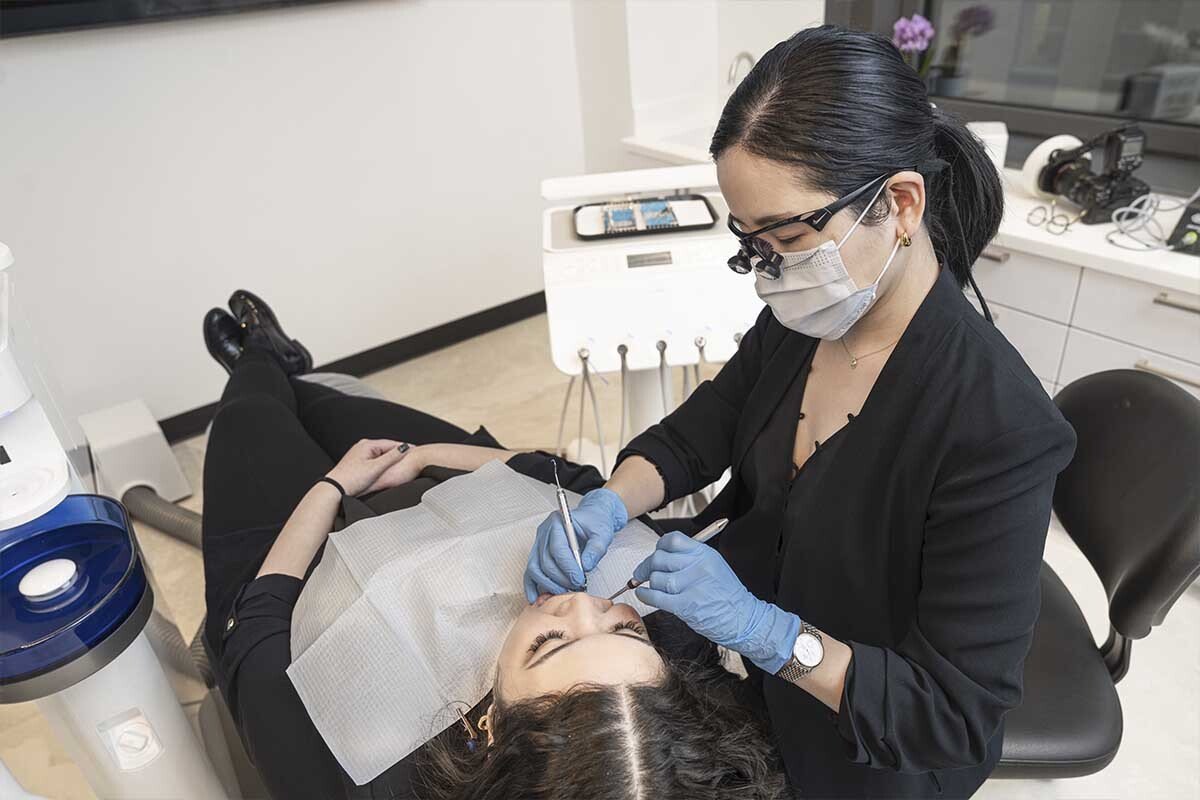
A dental cleaning is a non-invasive procedure in which a hygienist removes plaque and tartar buildup from your teeth. Tartar or calculus is hardened plaque.
Removing these substances helps eliminate harmful bacteria found in plaque and tartar, allowing you to maintain better oral health more easily.
What to Expect during a Professional Dental Cleaning
The process for a professional teeth cleaning is very straightforward.
Our hygienist will examine your teeth and gums to check for any obvious signs of disease. They will ask if there have been any changes to your medical health since your last appointment.
It’s essential that we are aware of any changes, as certain medical conditions or medications may impact the treatment we provide or alter your preventive dental care plan.
You will need digital X-rays occasionally, and if these are due, then they can be taken by our hygienist. These provide a more comprehensive overview of your dental health and can reveal any areas of concern that are not visible to the naked eye.
- Scaling
The next stage is to scale your teeth, a process that removes plaque and tartar. We use ultrasonic tools to loosen tartar and regularly irrigate your mouth to help wash away debris.
Once loosened, special hand tools are used to scale or scrape away the tartar, removing it entirely from around your gum line and between your teeth.
- Polishing
When all the tartar is removed, your teeth are gently polished using a special polishing paste. Polishing your tooth surfaces helps to smooth them, making it harder for plaque and tartar to adhere.
- Flossing
Our hygienist will floss between every tooth, check for any residual debris, and ensure that all calculus is thoroughly removed.
- Fluoride Application
Not everyone will require this service, but applying professional-strength fluoride can help harden tooth enamel, providing you with additional protection against cavities.
The fluoride can be applied to tooth surfaces or administered as a mouth rinse, and is quick, entirely painless, and non-invasive. It is also very affordable.
- Personalized Oral Hygiene Recommendations
After cleaning your teeth professionally, our hygienists can review your oral health with you and let you know how you are doing with your regular brushing and flossing routine.
They can advise you if any areas need a little extra care. If required, they can show you some newer brushing and flossing techniques that may be more effective and easier, and discuss suitable tools to use.
Types of Teeth Cleanings
Various types of teeth cleanings are available, depending on your oral health needs. All achieve the same aim, which is to leave you with cleaner teeth, removing as many harmful bacteria as possible and reducing your risk of oral disease.
- Prophylaxis
A prophylaxis is a standard dental cleaning as described above. It is a routine preventive appointment for individuals who generally have healthy teeth and gums, with a focus on maintaining good oral health.
- Gross Debridement
If you haven’t been able to visit the dentist in a while and have extensive plaque and tartar buildup as a result, we may recommend this treatment. It is similar to a standard dental cleaning, but takes longer to complete since there is likely more tartar to remove.
- Scaling and Root Planing
This is a deep teeth cleaning, and is used when someone has mild or moderate periodontitis or gum disease, and where some gum recession may have occurred.
Instead of just cleaning your teeth, scaling and root planing cleans beneath your gum line and around the tooth roots exposed due to gum recession. This treatment may be carried out in stages, and we may use local anaesthesia to numb your gums, ensuring you feel entirely comfortable.
How Frequently Should I Have a Dental Cleaning?
Most people need a teeth cleaning every six months, provided they have reasonable oral health. However, sometimes we may recommend more frequent cleanings.
For example, if you have any oral health issues, such as active gum disease, or have medical conditions that increase the risk of oral disease, you may benefit from hygiene appointments every three months.
We provide every patient with a custom preventive dental care plan after an initial dental exam. This will outline how frequently we recommend you have your teeth professionally cleaned. We review this plan regularly to accommodate any changes to your oral or general health.
How Can a Dental Cleaning Benefit Oral Health?
Routine hygiene appointments can provide several significant benefits, including:
- A reduced risk of oral diseases like tooth decay and gum disease.
- Protecting your overall health, as there is a link between oral health and general health.
- Preventing halitosis or bad breath by removing harmful and unpleasant-smelling bacteria from tooth surfaces.
- Reducing your long-term oral care costs, as this treatment can help prevent issues from developing.
Perhaps the connection between oral and overall health is the most important. Regularly having your teeth cleaned can help reduce your risk of developing diabetes, stroke, dementia, respiratory illnesses, and heart disease. If you have these conditions, it can help prevent them from worsening, for example, diabetes, making it easier to control blood sugar levels.
Signs You Could Benefit from a Dental Cleaning
Maintaining optimal oral health requires monitoring subtle changes in your mouth that point to active bacterial accumulation. When soft plaque hardens into mineralized calculus, it can’t be removed by home brushing and requires professional intervention. Consider scheduling a professional hygiene appointment if you notice any of the following clinical indicators:
- Gingival Bleeding: Your gums bleed during routine brushing or flossing, which is a primary sign of localized tissue inflammation caused by active biofilm.
- Visible Calculus Accumulation: Hard, yellow, or brown mineralized deposits are visible along the cervical margins of your teeth or just beneath the gumline.
- Thermal or Tactile Sensitivity: A sudden or gradual increase in sensitivity to hot, cold, or sweet stimuli, often caused by gum recession or early enamel erosion from bacterial acids.
- Persistent Halitosis: Chronic bad breath or an unpleasant taste that doesn’t resolve with mouthwash or regular brushing, indicating deeper bacterial strongholds in hard-to-reach areas.
At NYC Dentistry Center in Midtown East, our professional teeth cleaning services help prevent gum disease, cavities, and other dental issues while saving you time and money. To maintain a healthy, bright smile, please call our office at (212) 518-6096 or visit our Midtown East dentistry office.
FAQs
How Long Will a Dental Cleaning Take?
On average, a dental cleaning can take 30 minutes to complete. You may need a longer treatment if you have a more significant tartar buildup.
Can I Eat Straightaway after a Dental Cleaning?
You can eat straight away after a standard hygiene appointment, as there is no downtime. However, if you received local anaesthetic for a deep dental cleaning, such as a scaling and root planing treatment, you would need to wait until the anesthetic wears off before eating.
Is a Fluoride Treatment Necessary?
Professional fluoride applications may not be necessary for everyone. If we feel you will benefit from this treatment, we can advise you during your visit.
Will Dental Insurance Cover the Cost of a Hygiene Appointment?
A good dental insurance policy should cover at least part of the cost of a hygiene appointment. Your teeth cleaning cost coverage may depend on the extent of scaling required. Some policies have an annual limit. We can provide a quotation before your visit, depending on your insurance coverage, so you are aware of any out-of-pocket expenses.
6 E 45th St #801
New York, NY 10017
(45th St. btw 5th Ave / Madison Ave)
(212) 518-6096