Table of contents
What Is a Tooth Extraction?
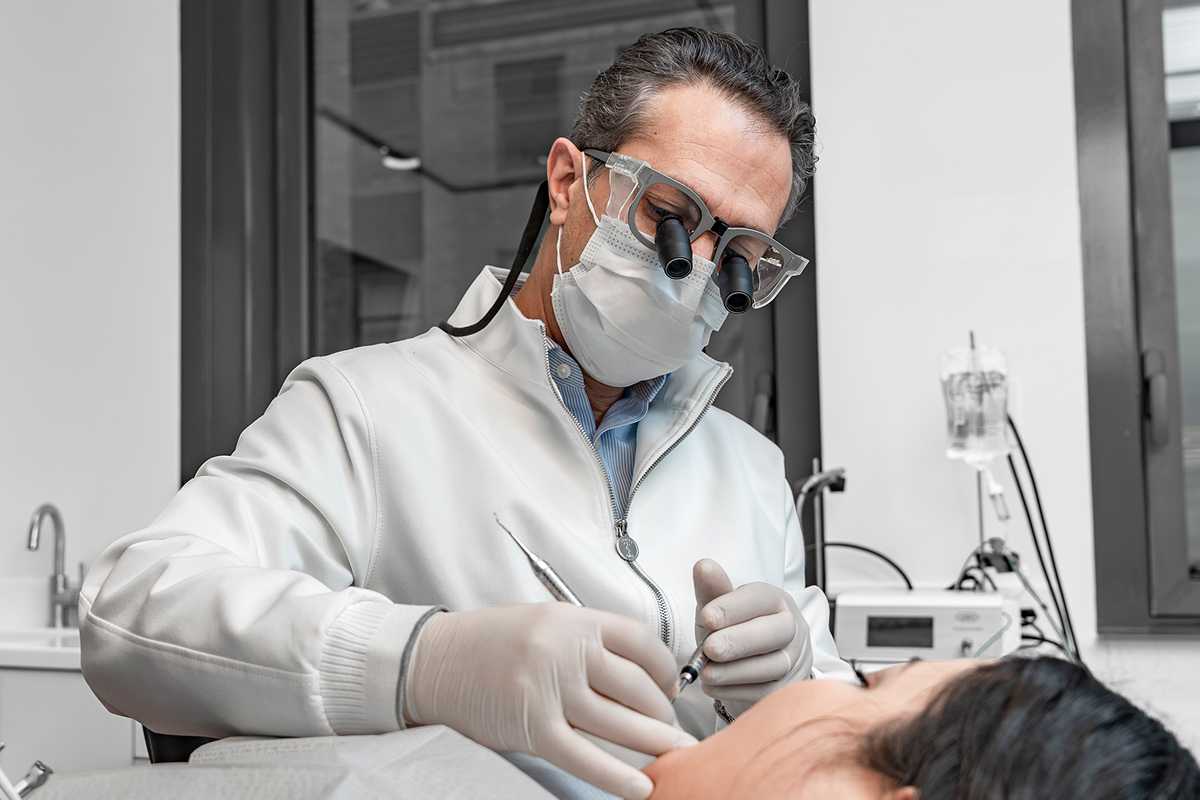
A tooth extraction is a surgical procedure in which a tooth is removed from its socket. The process is quite quick, and we take care to ensure it is as painless as possible.
There are two types of tooth removal surgeries we may suggest, which are outlined below.
- Simple Tooth Removal
We use this technique when the tooth is visible in your mouth and protrudes well above the gum line. Our periodontist and principal dentist, Dr. Navid Rahmani, or another of our experienced periodontists, will gently remove the tooth, often using an atraumatic technique.
Atraumatic tooth extraction is designed to protect and preserve the surrounding bone and gum, and is ideal if you intend to replace the tooth with an implant.
- Surgical Tooth Removal
Sometimes, a tooth has broken off near the gum line, so there is insufficient tooth structure exposed for an ordinary tooth removal technique. Instead, the tooth must be surgically exposed below the gum line so we can remove it.
Reasons for Tooth Extraction
There are numerous reasons why we may recommend removing a tooth, which include:
- Preparing the mouth for implants or dentures.
- Removing fractured or broken teeth that cannot be restored.
- Removing severely decayed or infected teeth.
- In preparation for orthodontics.
- Removing teeth loosened by severe periodontitis (advanced gum disease).
Benefits of Tooth Extraction
Often, we recommend tooth extraction when a tooth is infected and painful. In this case, removing it can provide immediate relief from pain and discomfort.
Tooth extraction helps prevent the infection from spreading to other nearby teeth, gums, and bone. At the same time, it helps protect oral and overall health. Severe tooth infections can develop into dental abscesses, which can become life-threatening on rare occasions.
The Tooth Extraction Procedure Step-By-Step
The process is straightforward and is outlined below; however, you will receive a custom treatment plan tailored to meet your unique oral health needs.
Step One: Dental Exam and Digital X-Rays
When you visit us, our dentist will gently examine your mouth, ask about your symptoms, and take digital dental X-rays of your teeth and the bone surrounding them. These digital images enable us to assess the extent of the damage and infection, and to plan effective treatment.
Step Two: Custom Treatment Plan
After your dental exam, we can discuss our findings in detail and provide a custom treatment plan. This will explain the type of extraction we recommend, why it is necessary, and how it will help your dental health. Your plan will cover the costs, which can depend on whether you require only local anesthesia or would prefer sedation dentistry.
Step Three: Tooth Removal
After providing sedation dentistry if required and numbing your mouth, our dentist will carefully remove your tooth. After removal, the empty socket is thoroughly cleaned and inspected. It may be stitched closed or left to heal naturally.
Post-op Care and Recovery
Recovery after a tooth extraction should be smooth and uneventful.
Oral Hygiene & Pain Relief
We will provide detailed information on maintaining a clean extraction site. You can continue to brush the rest of your teeth normally, taking care to avoid the area around the extraction site. We recommend using an antibacterial mouthwash or a warm saltwater rinse to aid in the healing process.
If you have a tooth infection, we may prescribe antibiotics to treat it. You can also take over-the-counter pain relief for any discomfort.
Diet
Try to avoid biting or chewing on the extraction site. If you had multiple teeth removed, you may need to follow a soft food diet for the first few days. It is better to avoid foods that are very crunchy or hard, or that contain nuts or seeds that could get stuck around the extraction site.
Swelling & Bruising
Any swelling can be managed by applying ice packs wrapped in a clean towel and holding them against your face. Apply the ice pack for 20 minutes on and 20 minutes off. After 24 hours, use moist heat pads instead, applying the same 20-minute on and 20-minute off routine.
Avoid Smoking or Using Straws
It is important to avoid smoking as this slows down the healing process. The sucking action can dislodge any protective blood clots in an empty socket, which is why we also advise against using straws.
Signs to Watch out for
It is unlikely that you will experience any complications during the healing process, but signs to look out for include infection, prolonged bleeding, and dry socket. If you develop any issues, you may notice signs such as an unpleasant taste, bad breath, pus forming at the extraction site, and increased discomfort.
If you are concerned about an infection after a tooth extraction, please get in touch with us. We can clean out the extraction site and place a protective dressing, which helps you feel more comfortable and enables healing.
Same-Day Tooth Extraction
Occasionally, an emergency tooth extraction is needed. For example, if you have a dental abscess, where a tooth is severely infected, there is a risk that it will impact your overall health.
Signs of a severe tooth infection include:
- A fever.
- Facial swelling.
- Swollen lymph nodes.
- Generally feeling extremely unwell.
It is important not to ignore the signs and to see an emergency dentist for a same-day tooth extraction.
FAQs
-
Is Tooth Extraction Painful?
Tooth extraction shouldn’t feel painful. Removing an infected tooth can help relieve pain and discomfort quickly.
-
How Long Will Recovery Take after Tooth Extraction?
If you only have a single tooth removed, you should feel back to normal by the next day. Multiple tooth extractions may require a longer recovery time. Generally, you should be back to normal within a few days, although the jawbone will take several weeks to heal completely.
-
Will Dental Insurance Cover the Cost of Tooth Extraction?
Dental insurance will almost certainly cover the cost of removing a tooth that could harm your oral health. In other cases, such as preparation for orthodontics, you may need to contact your insurance provider for further information and advice.
NYC Dentistry Center6 E 45th St #801
New York, NY 10017
(45th St. btw 5th Ave / Madison Ave)
(212) 518-6096