Table of contents
Symptoms of Tooth Decay
Symptoms of a cavity can depend on its size, and initially, you may not notice anything is wrong. Signs of decay include:
- You may notice tooth sensitivity to temperature changes or tooth pain, and sometimes small visible holes in a tooth can appear as decay progresses.
- Toothache.
- Visible holes in a tooth.
- Pain when biting or chewing.
- White, brown, or black stains on the tooth.
Tooth Decay Development
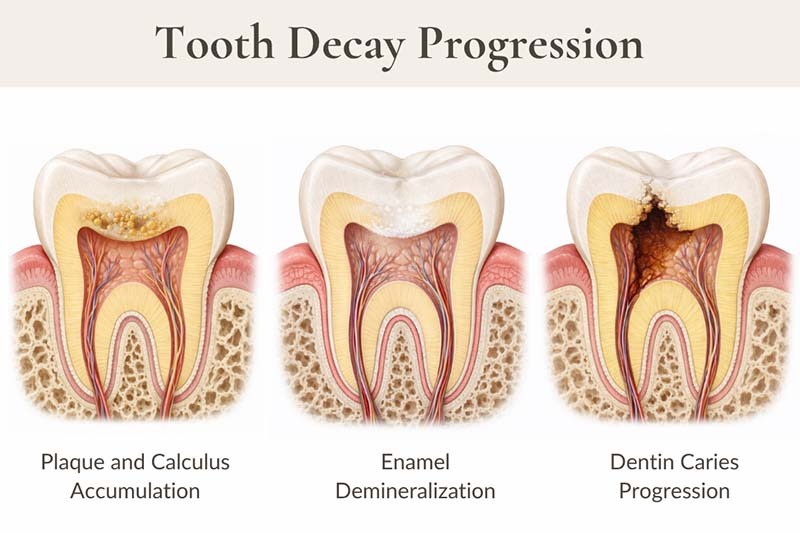
Tooth decay doesn’t happen overnight; it is a gradual process outlined below.
- Dental Plaque and Tartar Formation
Dental plaque is continually forming over your teeth. It is a sticky biofilm that contains bacteria. Most plaque and food debris are removed when you brush and floss your teeth; however, if you neglect your oral care, the bacteria in plaque feed off leftover food, forming acid as a byproduct.
Within just a couple of days, any plaque remaining on your teeth hardens into tartar or calculus. At this point, you cannot remove it by brushing and flossing, and tartar makes it easier for more plaque to stick to your teeth.
- Acid Erosion
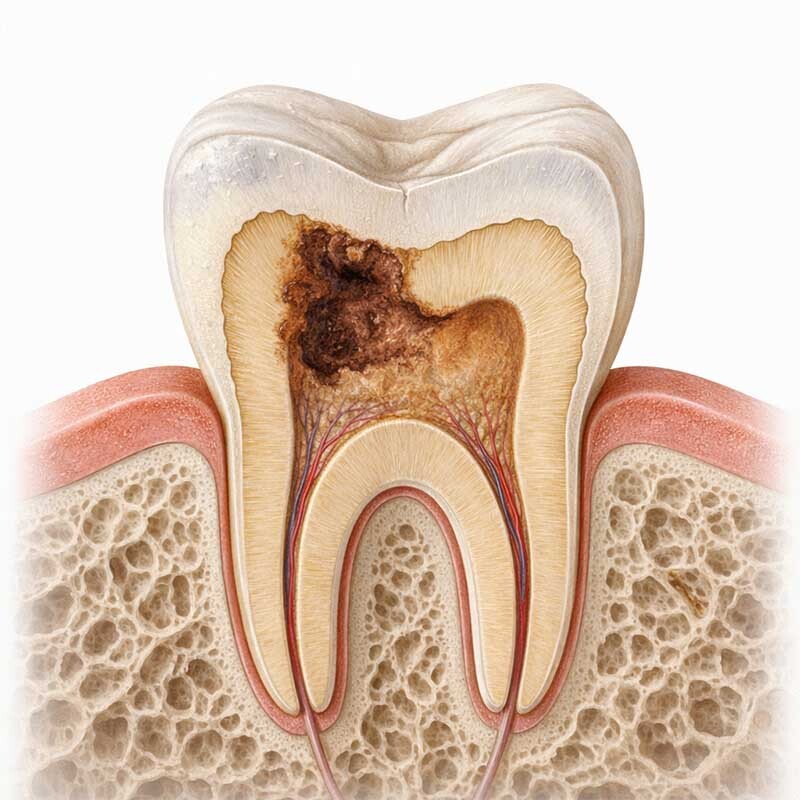
The acid produced by bacteria in dental plaque and tartar begins to attack your tooth enamel, removing minerals and softening it. Repeated exposure to these acids eventually causes small holes in your enamel that will deepen into cavities.
Once the acid has worn away your enamel, it begins attacking the much softer dentin underneath. At this point, you may notice your teeth start to feel sensitive.
Tooth decay treatment for a small to medium-sized cavity is straightforward. It can usually be filled with tooth colored composite resin quickly and cost-effectively.
- Cavities Start to Deepen
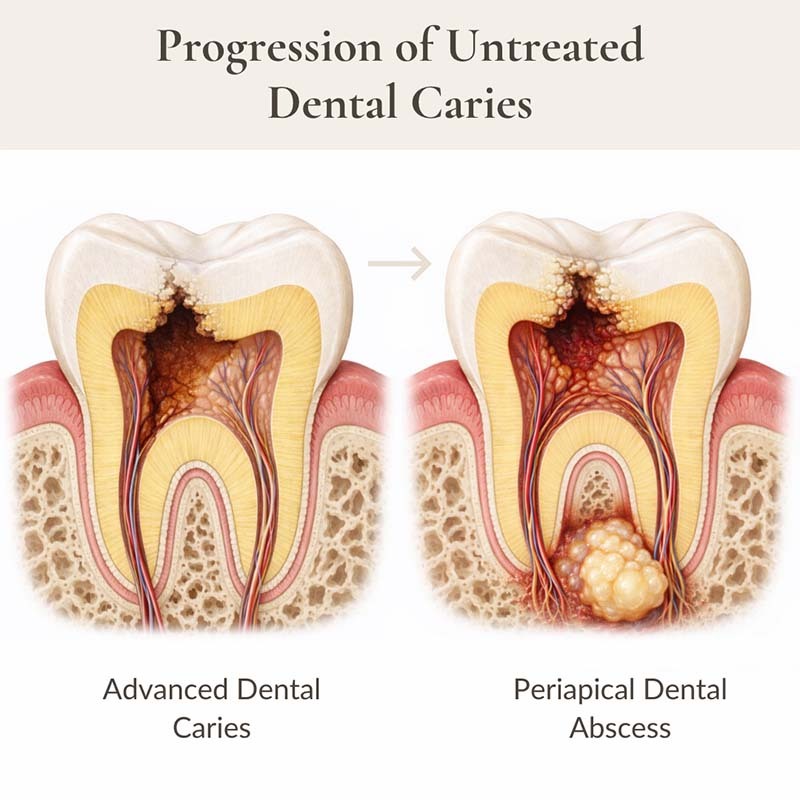
As the decay continues, the cavity will begin to become deeper, eventually reaching the pulp right in the centre of your tooth. The pulp contains nerves and blood vessels. As the pulp becomes infected and inflamed, it starts to swell, increasing pressure inside the tooth, which leads to a toothache.
When a cavity reaches the dental pulp, root canal therapy is needed to clean out the dental pulp and root canals, allowing the tooth to be permanently filled and restored with a dental crown.
Who Is More Likely to Get a Cavity?
Beyond basic oral hygiene, susceptibility to dental caries depends heavily on biological and anatomical risk factors. You are at a higher risk if you experience:
- Chronic Xerostomia (Dry Mouth): A reduction in salivary flow, often caused by medications or aging, deprives teeth of natural acid neutralization and essential mineral replenishment.
- Exposed Root Surfaces: Periodontal recession exposes cementum, which is significantly softer than enamel and demineralizes at a much faster rate.
- Deep Occlusal Anatomy: Intricate pits and fissures on molars trap plaque biofilm where standard toothbrush bristles cannot physically reach.
- Systemic Acid Exposure: Chronic conditions like GERD introduce gastric acid into the oral cavity, chemically softening the enamel matrix.
- Failing Dental Restorations: Degrading or leaking margins around old fillings and crowns create microscopic, un-brushable gaps that harbor recurrent (secondary) caries.
Eating Certain Foods and Drinks
Consuming a diet high in sugary foods and drinks can increase the risk of cavities because these foods provide a food source for the bacteria that cause tooth decay. However, some particularly sticky foods are more harmful because they cling to teeth for a longer period.
Frequent Snacking
We know that many people prefer to have snacks rather than regular meals to maintain their energy levels. However, whenever you eat something, acidity levels in your mouth increase as you feed the bacteria that create these acids. Therefore, your teeth are exposed to acid more frequently, increasing the risk of erosion and cavities.
Tooth Location
The chewing surfaces of your back teeth are more prone to cavities than front teeth. This is because they contain grooves and fissures that trap food and bacteria, making these surfaces harder to clean thoroughly with a toothbrush. Additionally, because they are located toward the back of the mouth, they can be more difficult to reach.
Baby Bottle Tooth Decay
Even very young children can develop cavities if they are sent to bed with a bottle full of a sugary liquid, milk, or formula. While these liquids can be comforting, they will remain on teeth during sleep, feeding the harmful bacteria that cause cavities.
A similar problem can occur if a toddler is given a sippy cup containing these liquids to drink from for several hours.
Inadequate Fluoride
Fluoride helps prevent cavities by hardening tooth enamel. It is added to some public water supplies and is also found in toothpaste and mouthwash. If you only drink bottled water and use fluoride-free dental products, you may not receive enough fluoride to prevent cavities.
Dry Mouth (Xerostomia)
Dry mouth is a condition where inadequate saliva is present to keep the mouth clean and fresh and to rinse away some harmful bacteria and loose food particles. Additionally, a drier mouth creates an environment that is favorable for harmful bacteria to thrive.
What Happens If You Don’t Get Treatment for Tooth Decay?
Tooth decay may seem like a minor problem, but it deserves to be taken seriously. Some people think that it doesn’t matter if children develop cavities because adult teeth will replace their milk teeth.
This overlooks the fact that milk teeth are crucial for a child’s growth and development, as well as for facilitating the proper development and eruption of their adult teeth. Losing baby teeth due to tooth decay can significantly impact this development.
Additionally, a toothache is unpleasant at any age. A serious cavity can make it difficult to eat comfortably and concentrate on everyday life and activities. Tooth loss can significantly impact appearance, negatively affecting self-confidence and self-esteem.
A deep cavity can develop into a dental abscess, which can cause severe problems or even become life-threatening.
Tooth Decay Prevention
Cavities are largely preventable with good oral hygiene and preventive dentistry. Below are some easy tips to follow.
- Brush at least twice daily with fluoride toothpaste.
- Floss once a day, and it doesn’t matter if you floss before or after brushing, or in the morning or evening, as consistency is key.
- Drink plenty of water, especially after meals, as this will rinse away some harmful bacteria and loose food particles.
- Avoid snacking between meals, or if you must have a snack, then choose tooth-friendly foods like fresh fruits and vegetables, hard cheese, and other sugar-free dairy products.
- Visit us regularly for checkups and hygiene appointments. These visits are essential for detecting any problems early on, hopefully well before you experience any discomfort and pain.
If you are experiencing tooth decay, NYC Dentistry Center in Midtown East can provide professional treatment to restore your teeth and prevent further damage. Call our office at (212) 518-6096 or visit our dentistry center to learn more.
NYC Dentistry Center6 E 45th St #801
New York, NY 10017
(45th St. btw 5th Ave / Madison Ave)
(212) 518-6096