Table of contents
What Is Tooth Sensitivity?
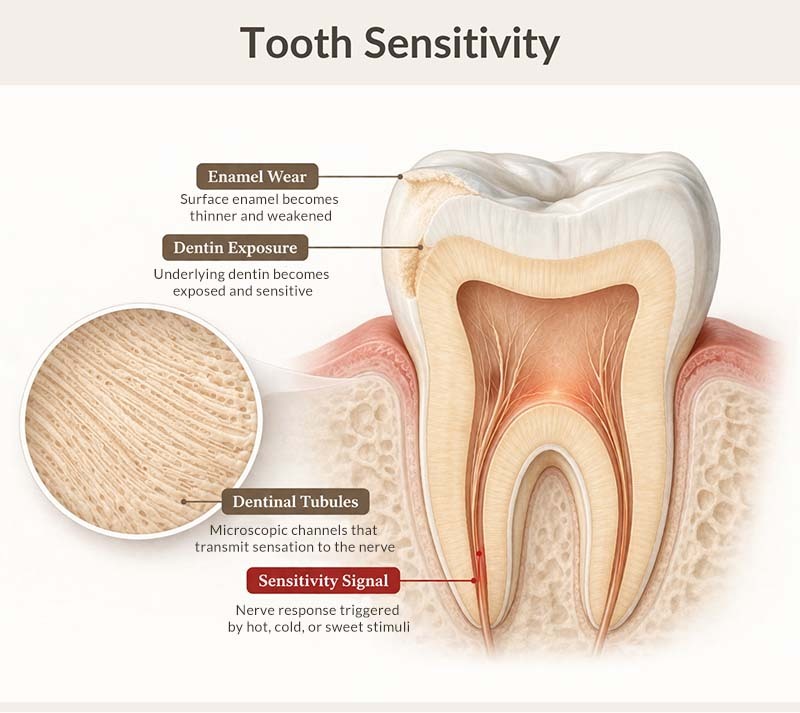
Tooth sensitivity or numbness can occur when the outer layer of enamel becomes damaged or worn. Tooth enamel protects a much softer layer of tooth structure underneath, called dentin.
When dentin becomes exposed, it can cause sensitivity or even pain when consuming hot, cold, sweet, or sour foods or drinks. Dentin consists of many tiny tubules that are tightly packed together, transmitting temperature changes to the tooth nerve and causing sensitivity and discomfort.
What Can Cause Tooth Sensitivity?
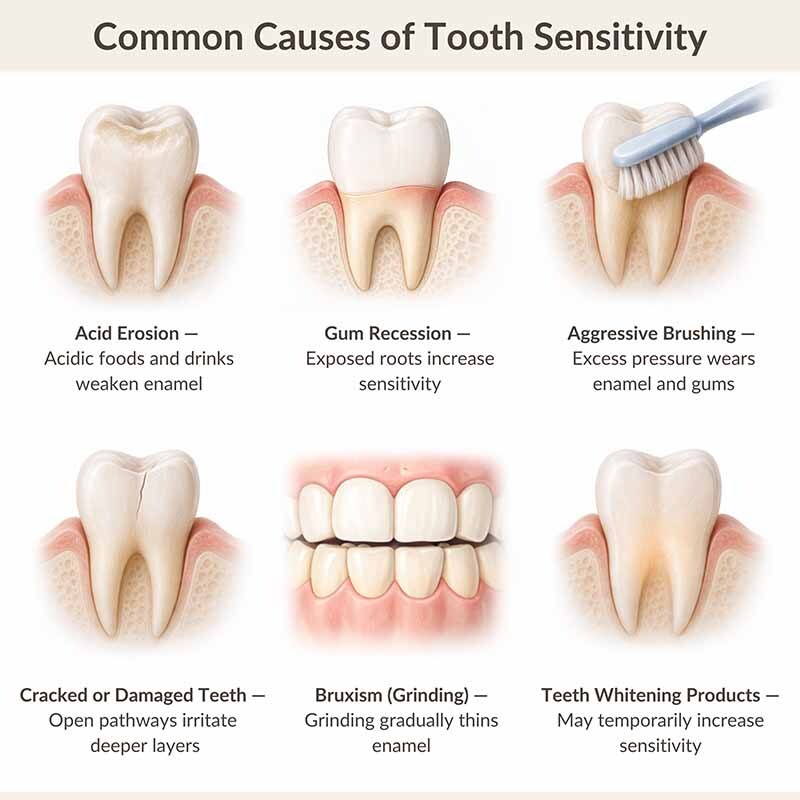
There are several reasons why your teeth may become more sensitive over time. These can include:
- Acid erosion.If you consume a lot of acidic foods and drinks, they can erode your enamel, gradually wearing it down and increasing the risk of tooth decay.
- Gum disease.When you have gum disease, it can cause gum recession, exposing the tooth roots that aren’t covered in protective enamel, so tooth sensitivity is more likely.
- Brushing teeth too hard.Using a hard-bristle toothbrush or too much pressure while brushing can literally wear away your tooth enamel and cause gum recession.
- Damaged teeth. A cracked tooth or developing hole in tooth allows bacteria to penetrate deeper layers, causing irritation, sensitivity, and potentially leading to infection if left untreated.
- Bruxism. Teeth grinding, clenching, or bruxism can wear away tooth enamel, exposing the dentin.
- Teeth whitening.Using over-the-counter or unregulated teeth whitening products can cause tooth sensitivity. It is always vital to get professional dental advice before whitening, as not everyone is suitable, especially if they already have damaged teeth or signs of enamel erosion.
- Dental treatments.If you have recently had a new filling or another dental procedure, you may experience temporary tooth numbness or sensitivity, which should subside within a few days. If it doesn’t, please contact us for further assistance and guidance.
Treating Tooth Sensitivity
Tooth sensitivity may be temporary, especially after dental treatment. However, if the issue persists and you find that you are avoiding certain foods, please talk to us about how to resolve this issue.
Possible treatment can include:
Fluoride Treatment
Professional fluoride treatments can help to harden and strengthen tooth enamel, protecting the dentin and reducing tooth sensitivity. We also recommend using fluoride products at home, such as prescription-strength fluoride toothpaste and mouth rinse. Otherwise, we can discuss suitable over-the-counter products to buy, such as toothpaste for sensitive teeth.
Dental Sealants
Applying a sealant to a tooth protects tooth enamel and prevents sensation from penetrating the dentin. It can be a very effective treatment.
Dental Bonding
Dental bonding uses tooth colored composite resin to mend any cracks or chips in teeth. It is a restorative treatment that lasts for several years.
Glass Ionomer Fillings
These fillings are used to protect tooth roots that may have become exposed to the oral environment. This filling material is more fragile than composite resin, which is why it is only used to protect tooth root surfaces that aren’t used for biting and chewing. Glass ionomer fillings can slowly release fluoride, helping to protect teeth further.
Night Splints
If you have bruxism, a custom-made night splint will help prevent further damage to your teeth. We will make it to fit your teeth exactly, and it will prevent your teeth from contacting during sleep.
We might suggest using more than one treatment for tooth sensitivity, to help provide maximum protection for teeth and relieve tooth sensitivity.
What to Do If You Have Tooth Sensitivity
If you have tooth sensitivity or tooth numbness, please schedule a dental exam with NYC Dentistry Center. We can examine your teeth gently, determine the reason, and provide suitable treatment to ensure your teeth feel more comfortable and are pain-free.
It is essential to receive a diagnosis, as you may have an untreated dental issue that will worsen without professional dental care. For example, failing to treat tooth sensitivity will allow these problems to worsen, causing increasing pain and discomfort and increasing the chances of tooth loss.
Preventing Tooth Sensitivity
You might not be able to prevent all cases of tooth sensitivity, for example, if a tooth becomes chipped or cracked. However, some preventive strategies can help to protect against tooth numbness and sensitivity.
- Brush teeth at least twice daily using a soft-bristle toothbrush and gentle pressure.
- Use fluoride toothpaste, and if you use tooth sensitivity toothpaste, use it regularly. The results take some time to accumulate.
- After brushing your teeth, spit but don’t rinse, so a thin coating of toothpaste will remain on your teeth, helping to reduce sensitivity.
Above all, see us regularly for dental exams and hygiene appointments. We can work with you to help maintain optimal oral health and address any minor issues, such as tooth sensitivity, before they worsen.
If you have noticed that your teeth feel more sensitive when enjoying a hot drink, an ice cream, or even when breathing in on a cold winter day, contact us for professional dental help and advice.
At NYC Dentistry Center in Midtown East, we provide effective solutions to reduce tooth sensitivity and protect your enamel and gums. Call our office at (212) 518-6096 or visit our dental office to learn more.
NYC Dentistry Center6 E 45th St #801
New York, NY 10017
(45th St. btw 5th Ave / Madison Ave)
(212) 518-6096