
Table of contents
What Is Tooth Pain?
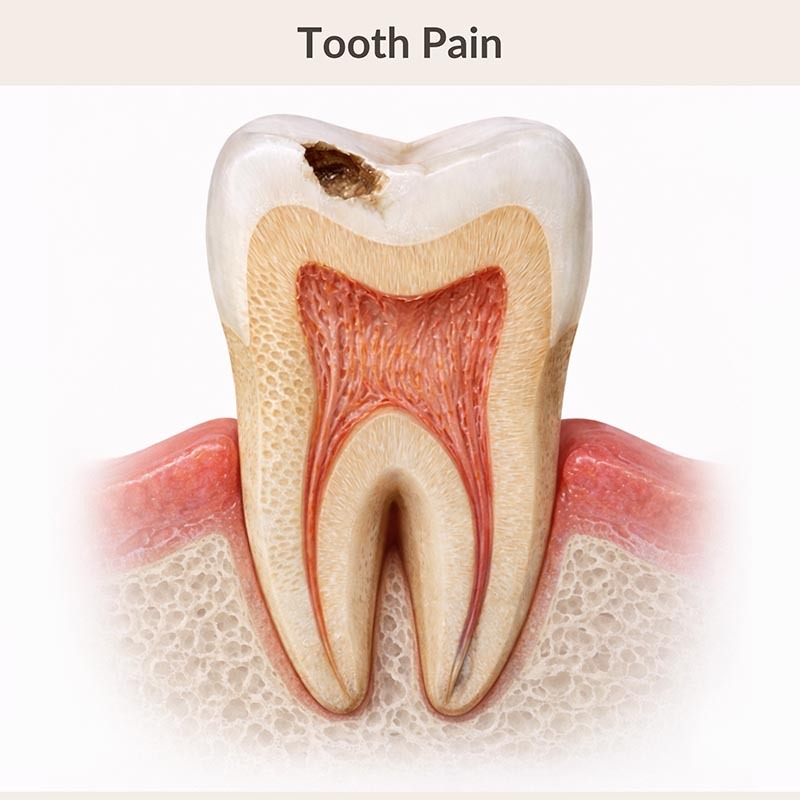
Tooth pain, also known as a toothache, refers to discomfort caused by issues such as tooth sensitivity, a hole in tooth, or irritation of the tissues surrounding the tooth.
Sometimes it is due to a temporary reason, such as having something stuck in your gum, which is quick to treat at home. Another example is tooth sensitivity after a filling that disappears as the tooth settles down. At other times, it can be more persistent and long-lasting.
Types of Tooth Pain
The sensory profile of tooth pain is directly linked to the specific nerve fibers being stimulated within the dental structure. We categorize these symptoms to help diagnose the underlying issue:
- Sharp, Transient Pain: Often triggered by thermal changes or sweet foods, this usually indicates dentin hypersensitivity or a microscopic breach in the enamel, stimulating the fast-conducting A-delta nerve fibers.
- Dull, Continuous Throbbing: Typically lingering long after a stimulus is removed, this deep ache points to advanced pulpal inflammation (pulpitis) or an active infection within the root canal system, affecting the slower C-fibers.
- Jabbing Pain on Occlusion: Sharp pain felt exclusively when biting down often signals a structural fracture within the crown or a localized inflammation of the periodontal ligament surrounding the root.
What Causes Tooth Pain
There are many reasons why teeth can start to feel painful, including:
- An untreated cavity or a worn or missing filling.
- Gum disease.
- Tooth infection or dental abscess.
- Impacted wisdom teeth.
- Sinus issues.
- Fractured or cracked tooth.
- Untreated bruxism (teeth clenching and grinding).
Signs That You Need to See a Dentist
Different types of tooth pain can cause different symptoms, which can include:
- Persistent, sharp, or throbbing pain.
- Swollen gum around the affected tooth.
- Sensitivity to hot and cold foods or anything sweet or sour.
- Pain when chewing.
- A persistent bad taste or bad breath.
When Is Tooth Pain a Dental Emergency?
Signs that your toothache is a dental emergency include pus buildup around the tooth or a pimple on the gum nearest the tooth, or severe pain that is keeping you awake.
Some more severe tooth infections can cause headaches, fever, and facial swelling. A severe tooth infection can develop into a dental abscess, making you feel very unwell and requiring emergency dental care.
In this case, you must contact us or go to your nearest ER immediately. Without treatment, a severe infection can become life-threatening.
Contact Us If You Have Severe Tooth Pain
If you have a severe toothache, you will need to get professional dental care. We recommend contacting NYC Dentistry Center as soon as possible. We can provide useful information over the phone based on your symptoms and schedule a dental appointment quickly.
Ignoring tooth pain is not a good idea, as it will likely worsen and become more difficult to treat. It could mean that you lose the tooth. Instead, it’s best to get a prompt evaluation and treatment that will soon relieve discomfort and pain.

Diagnosing Tooth Pain
Diagnosing tooth pain is a straightforward process. Below is a brief outline of the steps you can expect.
- A comprehensive dental exam and discussion of your symptoms. Our dentist will gently assess the tooth and the gum surrounding it.
- Digital X-rays help us detect tooth decay, identify a hole in the tooth, and evaluate whether inflammation is contributing to jaw pain or nerve involvement. These enable us to assess any infection or decay more closely and plan your treatment accordingly. If necessary, we may recommend a 3D cone beam CT scan for a more detailed analysis of your teeth and jawbone.
- After completing our dental exam and diagnostic tests, we can provide a personalized treatment plan. This will include immediate action to relieve pain and discomfort, as well as all follow-up treatment options we recommend.
If we suspect that tooth pain is due to a sinus issue, we may recommend that you visit your healthcare provider instead. You might need antibiotics for a sinus infection.
Treatment Options for Tooth Pain
Because tooth pain is a symptom rather than a standalone condition, clinical intervention focuses entirely on neutralizing the specific source of nerve irritation. Our primary goal is to alleviate acute discomfort immediately while permanently stabilizing the tooth’s structural and functional integrity through targeted therapy.

Pain Relief and Antibiotics
Our first objective is to relieve pain and discomfort, so we may prescribe painkillers and also antibiotics to treat a tooth infection. You would still need professional dental care to treat the underlying problem.
Dental Fillings
Tooth-colored dental fillings can treat small to medium-sized cavities in teeth, eliminating pain and tooth sensitivity. These repair the tooth so that you can bite and chew normally.
If you need a larger filling, we may recommend an inlay or onlay, which can also be tooth-colored but is stronger and more suitable for large cavities in back teeth.
Root Canal Therapy
Severe tooth pain can often be caused by a root canal infection, where bacteria have reached the nerve in the central part of the tooth and have also invaded the deep root canals. Root canal therapy removes the infection, allowing us to save the tooth and restore it with a permanent filling and dental crown.
Tooth Extraction
We always try hard to save teeth, but if a tooth is badly fractured, cracked, or severely infected, we may have to remove it. If you have wisdom tooth pain due to infection, then this tooth will need to be extracted.
Periodontal Therapy
If you have signs of periodontal gum disease, then we will recommend appropriate treatment to remove the infection and inflammation in your gum tissue. In this case, our periodontists will recommend a suitable treatment plan that may combine surgical and nonsurgical treatments.
Dental Crown
Dental crowns cover the entire tooth and are suitable when severe damage has occurred, resulting in a substantial loss of tooth structure. We often use dental crowns as the final restoration after root canal therapy.
Custom-Made Night Guard
Bruxism is often a nocturnal habit that can wear down teeth, cause gum recession, and dental pain. Often, it can be easily treated with a custom-made night guard that prevents you from clenching and grinding your teeth.
Treating Tooth Pain at Home
You can relieve the symptoms of tooth pain at home, but these will only provide temporary relief. A tooth that is painful and infected will not recover without professional dental care.
In addition to over-the-counter pain relief, other options to help treat tooth pain at home include:
- Warm saltwater rinse, as this is a natural disinfectant and can help relieve inflammation and pain. Make your own by dissolving half a teaspoon of salt into a cup of warm water.
- Hydrogen peroxide rinse can help with bleeding gums and ease tooth pain and inflammation. Dilute with equal parts water, and after rinsing your mouth, spit it out in the sink. You must never swallow hydrogen peroxide or use it neat.
- Ice packs wrapped in a clean towel and held against your face for 20 minutes on and 20 minutes off can help shrink blood vessels, reducing inflammation and pain.
Please get in touch with us if you have an uncomfortable or painful tooth, or if something feels off. Prompt treatment will alleviate the pain and discomfort, and there is a significantly greater chance that we can save the tooth from extraction.
NYC Dentistry Center6 E 45th St #801
New York, NY 10017
(45th St. btw 5th Ave / Madison Ave)
(212) 518-6096