
Table of contents
What Is a Hole in a Tooth?
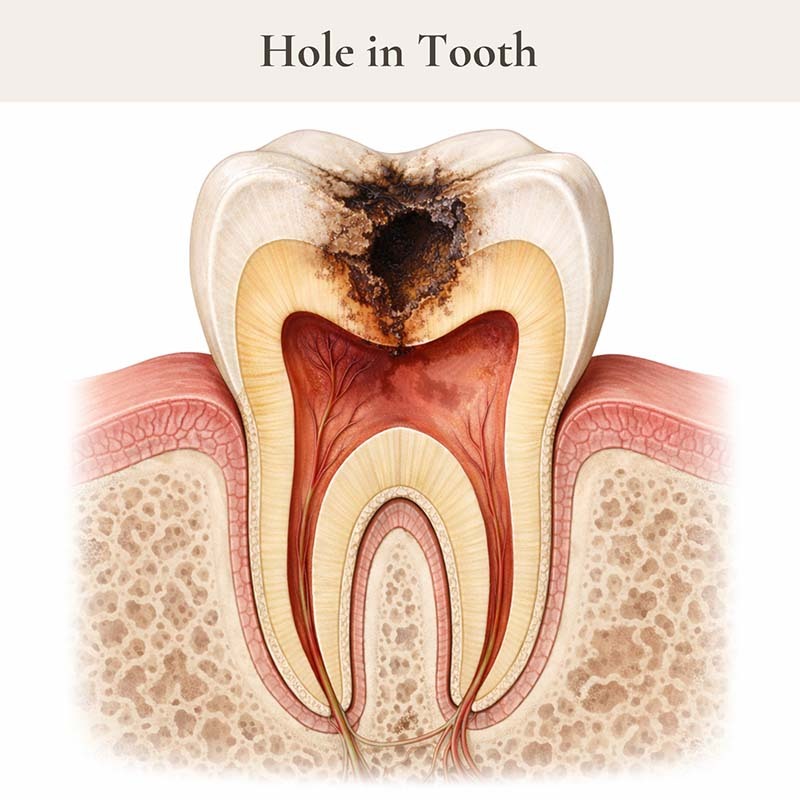
Clinically known as dental caries, a hole in a tooth is the structural manifestation of an active, localized bacterial infection. It represents the tipping point where demineralization, driven by organic acids produced by cariogenic bacteria within plaque biofilm, permanently outpaces the natural remineralization provided by saliva.
Once this acid erosion breaches the highly mineralized matrix of the outer enamel, it creates a microscopic micro-cavitation that rapidly expands into the softer, organic dentin layer beneath, necessitating immediate clinical intervention to halt further structural destruction.
Types of Cavities
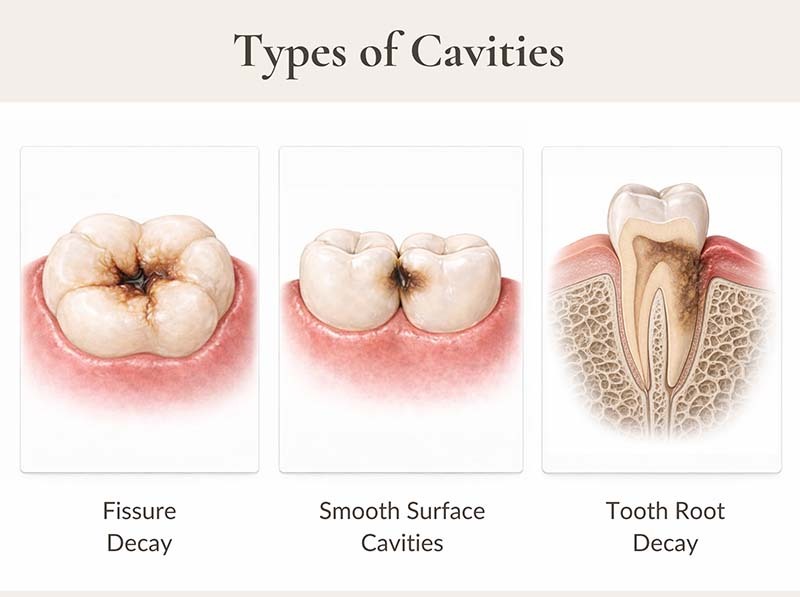
A cavity can form anywhere on a tooth’s surface, and the following are the most common types of tooth decay.
Fissure Decay
Your molars and premolars are particularly prone to developing cavities on the chewing surfaces. This is because the surfaces have lots of intricate fissures that tend to trap food particles and dental plaque.
These fissures can be quite deep and tricky to clean with a toothbrush.
Smooth Surface Cavities
These and cavities can form in the contact areas between teeth or on other smooth tooth surfaces. They are preventable and can sometimes be reversed with professional dental care, like fluoride applications.
Tooth Root Decay
This is when cavities begin to form in tooth roots that have become exposed due to receding gums, which are often associated with bleeding gums, gum pain in one spot, and the appearance of black triangle teeth. Unlike the rest of the tooth, your tooth roots are not protected with enamel. They are covered with a softer material called cementum that is more easily damaged, allowing cavities to form.
Who Can Develop Tooth Decay
Anyone can get tooth decay at any age. Many children develop cavities because they don’t brush properly, or adults don’t properly supervise their brushing and flossing. They can also tend to consume more sugary foods and beverages.
Adults can develop cavities, sometimes around the edge of older fillings, especially if they suffer from teeth grinding (bruxism) or have experienced a broken tooth. They are also more likely to develop cavities in tooth roots exposed to gum recession, an issue that tends to affect older people more frequently.
Symptoms of a Cavity
A cavity can be symptomless, but at other times, there are signs that you are developing a hole in the tooth. Signs can include:
- A visible hole or black or brown spot in a tooth.
- Tooth sensitivity to temperature changes or when eating something sweet.
- Bad breath or an unpleasant taste can be a sign of a developing tooth infection.
- Swollen gums around the tooth or gums that start to bleed.
- Toothache that may be continuous or only present when you bite down.
How Does a Cavity Develop?
The cavities developed due to exposure to dental plaque, which can harden into tartar or calculus.
Dental plaque and tartar contain harmful bacteria that thrive on leftover food trapped on and in between your teeth. They produce acid as a byproduct. The acid gradually weakens tooth enamel by removing some minerals. Repeated exposure to these acids eventually causes a cavity that penetrates the enamel, reaching into the dentin underneath.
Dentin is considerably softer than enamel, so before long, a hole begins to form. Eventually, the cavity will reach the dental pulp in the tooth’s center.
A cavity can develop quite slowly initially, involving several stages.
- Demineralization
During this first stage, your tooth enamel becomes softer as minerals are removed by exposure to acids. At this point, you may not notice any symptoms other than chalky or white spots on your teeth.
- Tooth Enamel Decay
As demineralization continues, the acid eventually breaks through the enamel. You may be able to see cavities or holes forming on your teeth at this point, and they could appear black or brown in color.
- Dentin Erosion
Once the acid breaks through your tooth enamel, dental plaque bacteria can enter your tooth, soon breaking down the dentin and causing it to decay, creating a larger cavity.
- Dental Pulp Infection
Eventually, the cavity will reach the dental pulp, which contains the nerves and blood vessels of the tooth. At this point, you will likely feel increasing pain and discomfort, which may include pain behind front teeth or spreading jaw pain. The gum around the tooth can also begin to swell and bleed.
- Dental Abscess
Without dental treatment, the infection and inflammation can spread into your tooth roots, causing an abscess. The infection can then spread into the surrounding bone and may even impact overall health. On rare occasions, it can spread to your bloodstream, causing sepsis, or even affect your brain.
What Are the Risk Factors for Developing Cavities?
Most often, tooth decay occurs due to poor oral hygiene; however, some people are at a higher risk of dental caries than others. Risk factors can include:
- Dry mouth or xerostomia, as the drier conditions allow bacteria to thrive.
- Taking certain medications that have dry mouth as a side effect.
- Receding gums.
- Frequent snacking between meals on sugary or starchy foods and drinks.
- Receiving radiation therapy for head and neck cancers.
Diagnosing a Cavity
If you are a regular patient at NYC Dentistry Center, we can often detect small cavities during your dental exams. During your dental exam, we carefully probe each tooth, checking for any signs of soft spots that can indicate demineralization.
We also take regular sets of digital dental X-rays to check for cavities that aren’t visible to the naked eye, such as in between teeth.
However, if it’s been a while since you have seen a dentist and you suspect you have tooth decay, schedule an appointment to visit us. We can soon identify any dental issues and provide suitable treatment.
Treating Cavities
The treatment we suggest will depend on the size of the cavity. Potential remedies can include:
- Fluoride.
- Dental fillings.
- Root canal therapy.
- Tooth removal.
- Fluoride
Fluoride is highly effective in helping to re-harden tooth enamel that exhibits early signs of demineralization. We can provide professional-strength fluoride applications in various forms, including mouth rinse, varnish, gel, or foam. Additionally, we may also prescribe fluoride toothpaste and mouthwash for use at home, or we will recommend a suitable brand to purchase.
- Dental Fillings
If the decay has caused a cavity, then we will need to remove all the damaged tooth structure to place a dental filling. Fillings can be made from tooth colored composite resin. If you need a larger filling, then we will recommend it be made from ceramic or gold, which is much stronger and longer-lasting. These fillings are called inlays or onlays.
- Root Canal Therapy
When a cavity reaches the dental pulp, root canal therapy is necessary to remove the pulp and all pulp tissues extending into the root canals within the tooth roots. This endodontic treatment has a very high success rate because we utilize microscopic dentistry to remove all infection thoroughly.
Once all the tissues are removed, the tooth is disinfected and permanently sealed. Usually, a dental crown is needed to protect the tooth afterward.
- Tooth Removal
Sometimes, a tooth cannot be saved when the infection is especially severe and has developed into a dental abscess. In this case, we can remove the tooth and discuss how best to replace it.
Preventing Cavities
Tooth decay is preventable, and below are some easy tips to help you maintain strong, healthy, cavity-free teeth.
- Brush your teeth at least twice daily using fluoride toothpaste and a soft-bristle toothbrush.
- Ensure you floss daily to clean between each tooth where your toothbrush cannot reach.
- Schedule regular dental exams and hygiene appointments. Most people need to visit us every six months.
- Watch your diet and try to avoid snacking on sugary and starchy foods between meals.
- Dental sealants can be useful for protecting the chewing surfaces of larger back teeth. Please ask us if you are suitable, as we can only use sealants on teeth that don’t have any cavities.
If you have a hole in your tooth and want to prevent further dental problems, NYC Dentistry Center in Midtown East provides professional care and personalized treatment. Call (212) 518-6096 or visit our dentistry center.
NYC Dentistry Center6 E 45th St #801
New York, NY 10017
(45th St. btw 5th Ave / Madison Ave)
(212) 518-6096