Table of contents
What Is Jaw Pain?
Many people experience occasional jaw pain, characterized by a slight aching or stiffness in the jaw. In some cases, this jaw pain may be more persistent and is due to an unresolved dental issue, such as teeth grinding (bruxism), a tooth infection, or gum disease that can contribute to chronic jaw pain.
However, sometimes jaw pain is caused by a more serious problem. Severe jaw pain can be due to an injury to your jaw. It can also be a symptom of a heart attack.
Understanding the Different Types of Jaw Pain
A pain in the jaw can feel different, depending on its cause.
- Stiff jaw joints. Your lower jaw is hinged to your skull by your temporomandibular joints. They are located just in front of your ears, on either side of your skull, and when working normally, allow you to move your jaw comfortably up and down and from side to side.
- Aching or throbbing jaw. The pain in your jaw may feel achy or throbbing.
- Severe pain. An injury to your jaw can cause severe pain.
- Pain on opening your mouth. This is a condition called trismus.
- Pain on one side of the jaw. If you have jaw pain on your right side or jaw pain on your left side, it may be due to a problem with your jaw joints called temporomandibular joint disorder (TMD) or severe tooth pain related to infection or decay.
When Is a Painful Jaw a Medical Emergency?
If you experience pain spreading from your chest and shoulders into your jaw, this can indicate a medical emergency, as it may be a symptom of a heart attack. In this case, please call 911.
It is also a medical emergency if you think you may have dislocated or broken your jaw, and you would need to go to your nearest ER, as you may require treatment from an oral maxillofacial surgeon.
Jaw pain that persists for more than a week requires a thorough investigation. Please get in touch with us if you are in this situation so we can assist you.
What Can Cause Jaw Pain?
While Temporomandibular Joint Disorders (TMD) are the primary culprit, jaw pain can manifest from a complex network of trigeminal nerve pathways, dental pathologies, or systemic conditions. Identifying the exact etiology is crucial, as jaw discomfort is frequently a referred symptom from non-joint-related issues, such as deep-seated tooth infections, myofascial pain syndrome, or even atypical facial neuralgia, each requiring a distinct clinical treatment pathway.
Teeth Grinding and Clenching (Bruxism)
Bruxism tends to be a nocturnal habit that can place your jaw joints under considerable stress, causing them to become inflamed and painful. The pain may radiate out into your neck and shoulders and cause chronic headaches. This condition is often linked to TMD.
Arthritis
Jaw joints can become arthritic, leading to inflammation and jaw pain.
Dental Abscess
A dental abscess is a bacterial infection that can form around the tip of a tooth root. Consequently, an abscessed tooth can cause pain in the jaw.
Periodontal Disease
Periodontal disease is also a bacterial infection, often caused by inadequate oral care. It can cause extensive infection and inflammation in the gums, bleeding gums, and localized gum pain in one spot, which can spread to the jawbone, causing pain.
Mumps
Mumps is a condition that causes the salivary glands to swell. These glands are located between the jaw and the ears, and consequently, when they swell, they can feel painful.
Sinus Infection
Your sinuses are air-filled cavities on either side of your nose, and if you have any infection, they can become filled with mucus. This can cause pressure on the upper back tooth roots that feels like jaw pain.
Misaligned Bite
If your teeth cannot bite together correctly, it can put pressure on your temporomandibular joints, resulting in pain. Bite problems can also occur if you have older dental restorations that no longer fit properly, broken teeth, or naturally small teeth that affect bite alignment.
Jaw Injury
It is possible to dislocate or break your jaw, and this is a dental emergency that requires immediate treatment at a hospital.
Diagnosing and Treating a Painful Jaw
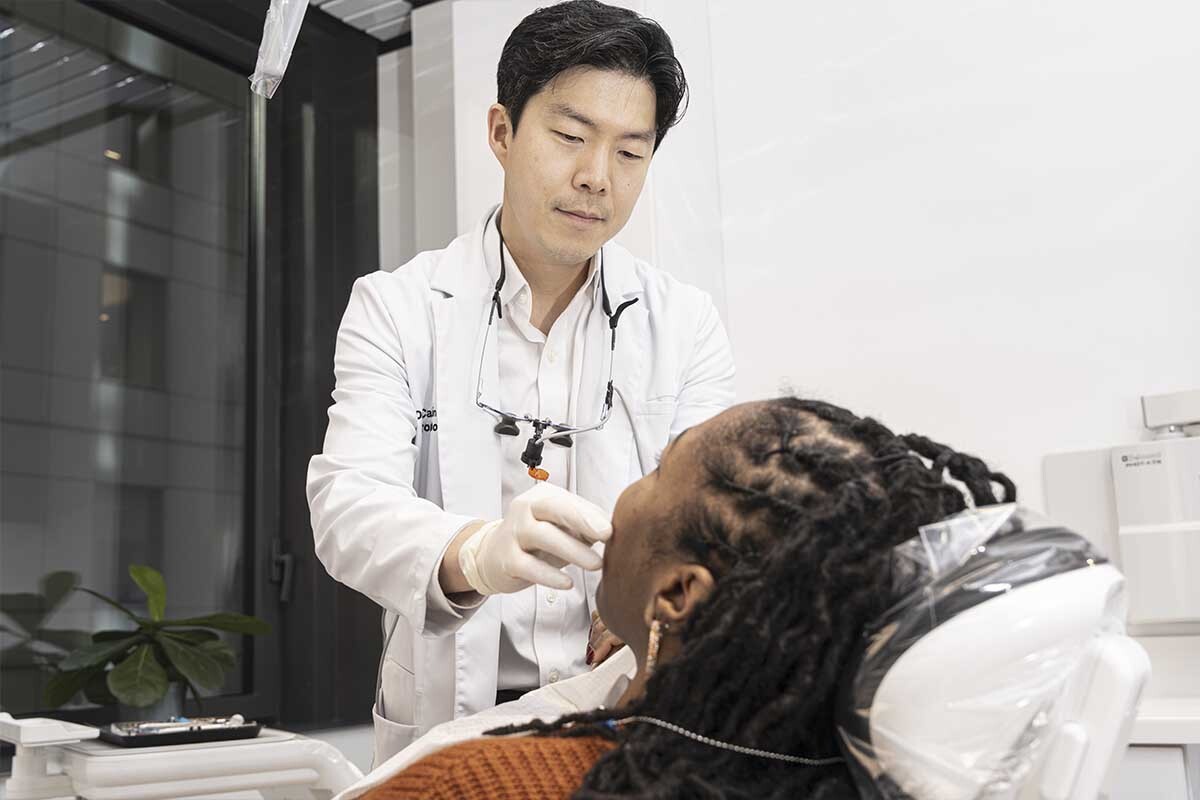
When you visit our dental office with a painful jaw, we can soon diagnose the problem. Our TMJ dentist in NYC will gently examine your jaws, assess the range of motion, and discuss your symptoms.
Digital dental X-rays will almost certainly be required, and we may want to take a cone beam CT scan, which provides us with clear 3D images of your jaws, including your jaw joints.
Once we have a diagnosis, we can prescribe a suitable treatment, which will depend on the underlying cause of your pain. We may recommend using a combination of different therapies to achieve an optimal outcome.
Night Splint
A mouthguard or night splint is often used to treat issues like bruxism, which can cause TMD.
Receiving suitable TMD treatment, such as a custom-made night splint that fits comfortably over your upper teeth, prevents clenching and grinding during sleep.
Wearing this night splint regularly will help protect your teeth and reduce inflammation in your jaw joints.
Muscle Relaxants and Anti-Inflammatories
Pharmaceutical management offers targeted relief by addressing both the neuromuscular and inflammatory components of jaw dysfunction:
- Neuromodulator Injections: Therapeutic injections, such as Botox®, into the masseter and temporalis muscles temporarily inhibit localized acetylcholine release. This reduces muscle hyperactivity and downregulates involuntary nocturnal clenching (bruxism) without compromising normal mastication or speech, effectively allowing fatigued facial tissues to heal.
- Targeted Anti-Inflammatories: Advanced NSAIDs or localized corticosteroid therapies work to block the biochemical cascade responsible for prostaglandin synthesis within the joint capsule. This actively reduces intra-articular swelling, alleviates acute joint arthralgia (pain), and restores fluid jaw mobility.
Dental Abscess Treatment or Periodontal Therapy
If it is due to a dental abscess or periodontal disease, you will need dental treatment for these conditions.
A dental abscess may be treated with root canal therapy and antibiotics, or it may be necessary to extract the tooth. We can provide the latest periodontal care to treat gum disease.
Orthodontics
A poor bite can be addressed through orthodontics, which utilizes braces or other orthodontic appliances to realign teeth and jaws for more comfortable alignment.
Restorative dentistry
Any poorly fitting restorations can be replaced. We can also adjust your teeth slightly so they bite together more comfortably.
Jaw Surgery
TMJ surgery can be useful if you have more severe issues that haven’t responded to less invasive options. We wouldn’t normally recommend this treatment path initially, as obviously, recovery afterward will take longer.
Can I Treat Jaw Pain at Home?
If you experience jaw pain, it is essential to receive a proper evaluation of the cause and, if necessary, professional dental care. There are some home remedies that you can try in conjunction with professional dentistry, which may be useful.
Below are some strategies you can try.
- Avoid eating foods that are harder to chew, and instead opt for foods that are softer and require minimal chewing. Placing that stress on your jaw joints can help them feel more comfortable.
- Try gently massaging your jaw as this can help improve blood flow and relieve pain. It can also be beneficial to try stretching your jaw muscles to help them relax. We can show you some simple exercises to try.
- Applying a moist heat pack to your jaw joints can feel comforting, and the heat helps jaw muscles relax. Alternatively, you can use an ice pack wrapped in a towel to help reduce inflammation and swelling. The pack should be held against your face for no more than 20 minutes at a time.
- Bruxism can be related to stress, and if this is the case, then try to reduce your stress levels. Your healthcare provider can give you some useful tips, or simply taking more exercise, meditating, or following a good sleep hygiene routine can be beneficial.
Have you been searching for a TMJ specialist near me? Contact NYC Dentistry Center for expert and gentle dentistry that will help you feel more comfortable quickly.
NYC Dentistry Center6 E 45th St #801
New York, NY 10017
(45th St. btw 5th Ave / Madison Ave)
(212) 518-6096