Table of contents
What is a Tooth Infection?
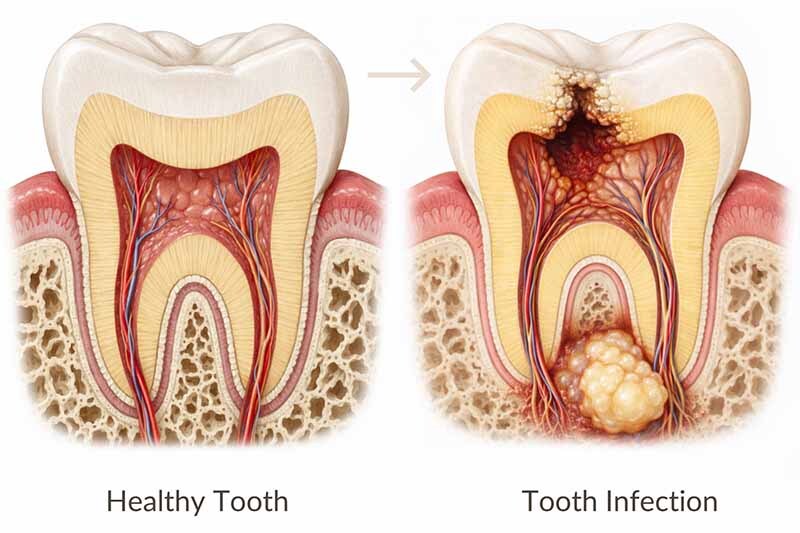
A tooth infection occurs when bacteria from tooth decay or a hole in tooth enter the inner layers of a tooth. Normally, teeth are protected by enamel; however, if the tooth enamel becomes cracked or if you have an untreated cavity, bacteria can easily enter the tooth, causing infection.
When the bacteria first enter a tooth, they will gradually begin to erode the layer of dentin directly underneath the enamel. Before long, they will reach the central part of the tooth called the pulp, which contains the nerve and blood vessels of the tooth.
At this point, the tooth will likely feel extremely painful. Without treatment, the infection will spread into the root canals in the tooth roots. A root canal infection can eventually spread to the gum and bone around the tooth, causing an abscessed tooth in NYC.
Symptoms of a Tooth Infection
The main symptom of a tooth infection is tooth pain, often accompanied by tooth sensitivity, swollen gums, and sometimes jaw pain radiating from the affected tooth. The type of pain can be sharp or dull, and it can start to affect your jaw, neck, and ear.
Other symptoms can include:
- Bad breath.
- Tooth sensitivity, especially to hot and cold beverages.
- Swollen gum tissue around the tooth, and the gum may develop a pimple caused by pus buildup.
- An unpleasant taste.
- A loose tooth.
If you have an abscessed tooth, there is a risk that it can affect your general health. In this case, symptoms may include swollen lymph glands in the neck, facial swelling, feeling unwell, and developing a fever. It can affect breathing and make it difficult to open your mouth fully.
A severe tooth infection can become life-threatening, so if you recognize any of the symptoms, you must see an emergency dentist for an abscess immediately. Either come to see us or go to your nearest ER.
What Can Cause an Infected Tooth?
Causes can include:
- Broken tooth or chipped enamel, untreated tooth decay, gum pain in one spot, or issues related to a gummy smile that traps bacteria.
- Untreated gum disease.
- Untreated cavities or where a filling has failed.
If you suspect a tooth infection, please get in touch with us so we can diagnose the issue promptly. We can soon provide infected tooth pain relief to help you feel more comfortable quickly.
Diagnosing a Tooth Infection
Diagnosing whether a tooth is infected is a quick process. We can carefully examine the tooth and may check to see if the pulp is living by placing something cold on the tooth. An X-ray allows us to assess the extent of the infection and to see if we can save the tooth.
After examining your tooth, we can discuss your custom treatment plan.
Treating Tooth Infections
The primary objective of treating a dental infection is to eradicate the bacterial source, prevent the spread of necrosis to adjacent tissues, and alleviate acute discomfort. Depending on how deeply the bacteria have penetrated the tooth’s structure, treatment ranges from internal preservation techniques to surgical intervention.
Root Canal Therapy
When advanced decay or trauma allows bacteria to breach the pulp chamber, endodontic therapy is required to save the natural tooth. This process involves meticulous mechanical debridement and chemical sanitization of the root canals to eliminate all infected nerve and vascular tissue.
Once cleared, the internal pathways are hermetically sealed, and the tooth is reinforced with a custom dental crown to restore its full structural strength. In cases involving systemic symptoms or localized swelling, adjunctive antibiotics may be prescribed to stop the infection from spreading.
Draining a Dental Abscess
If you have an abscessed tooth and a pimple has formed on the gum, we may need to make a small opening in the gum tissue to allow the pus buildup to drain. A rubber drainage tube is carefully inserted into the opening, and this may be left in place for 24 hours or more to allow the infection to drain fully.
Tooth Extraction
While our absolute priority is always to preserve your natural dentition, an extraction becomes necessary when a tooth is deemed non-restorable. This occurs when extensive structural damage or advanced alveolar bone loss compromises the root foundation, turning the tooth into a chronic reservoir for infection that threatens the surrounding jawbone and adjacent teeth.
Following an extraction, we prioritize discussing restorative options, such as dental implants, to preserve your bite alignment.
Wisdom Tooth Infection Treatment
Wisdom tooth infections are common because these large, back teeth typically erupt during the late teens or early 20s and often cause problems.
Because these teeth are located at the back of the mouth, they can be challenging to keep clean, and as a result, they are prone to infection and decay. They may partially erupt and remain partly covered with gum tissue, trapping food and bacteria and increasing the risk of infection. Removing these teeth eliminates the infection.
Preventing Tooth Infections
Preventing a pulpal infection relies entirely on maintaining the structural integrity of the outer enamel barrier. Proactive oral care aims to neutralize harmful oral acids and eliminate plaque biofilm before bacteria can migrate into the deeper, highly sensitive layers of the dentition.
Schedule Regular Dental Checkups
Ensure you schedule regular dental exams, as these are essential for monitoring your oral health. We carefully inspect the condition of every tooth and can quickly identify the first signs of cavities or other dental health issues.
We monitor the development of wisdom teeth that are yet to erupt using digital dental X-rays and can predict if they will cause problems as they emerge.
Schedule Professional Dental Cleanings Regularly
Routine clinical prophylaxis is a critical line of defense against deep-seated infections. Over time, soft plaque mineralizes into calculus (hardened tartar), which standard brushing and flossing cannot dislodge.
These calcified deposits act as porous breeding grounds for pathogenic bacteria; regular professional cleanings allow us to thoroughly remove these subgingival reservoirs and intercept decay before it reaches the dental pulp.
Follow a Good Oral Care Routine at Home
Between appointments, be sure to maintain your oral health by following a good daily dental care routine. Twice-daily brushing and flossing every day will take you less than 10 minutes, which could save hours in the dental chair.
If you notice a problem developing in between visits or chip or crack a tooth, contact us for immediate dental care.
At NYC Dentistry Center in Midtown East, we provide expert care to treat tooth infections and protect your natural teeth. Call our office at (212) 518-6096 or visit our dental office to learn more.
NYC Dentistry Center6 E 45th St #801
New York, NY 10017
(45th St. btw 5th Ave / Madison Ave)
(212) 518-6096